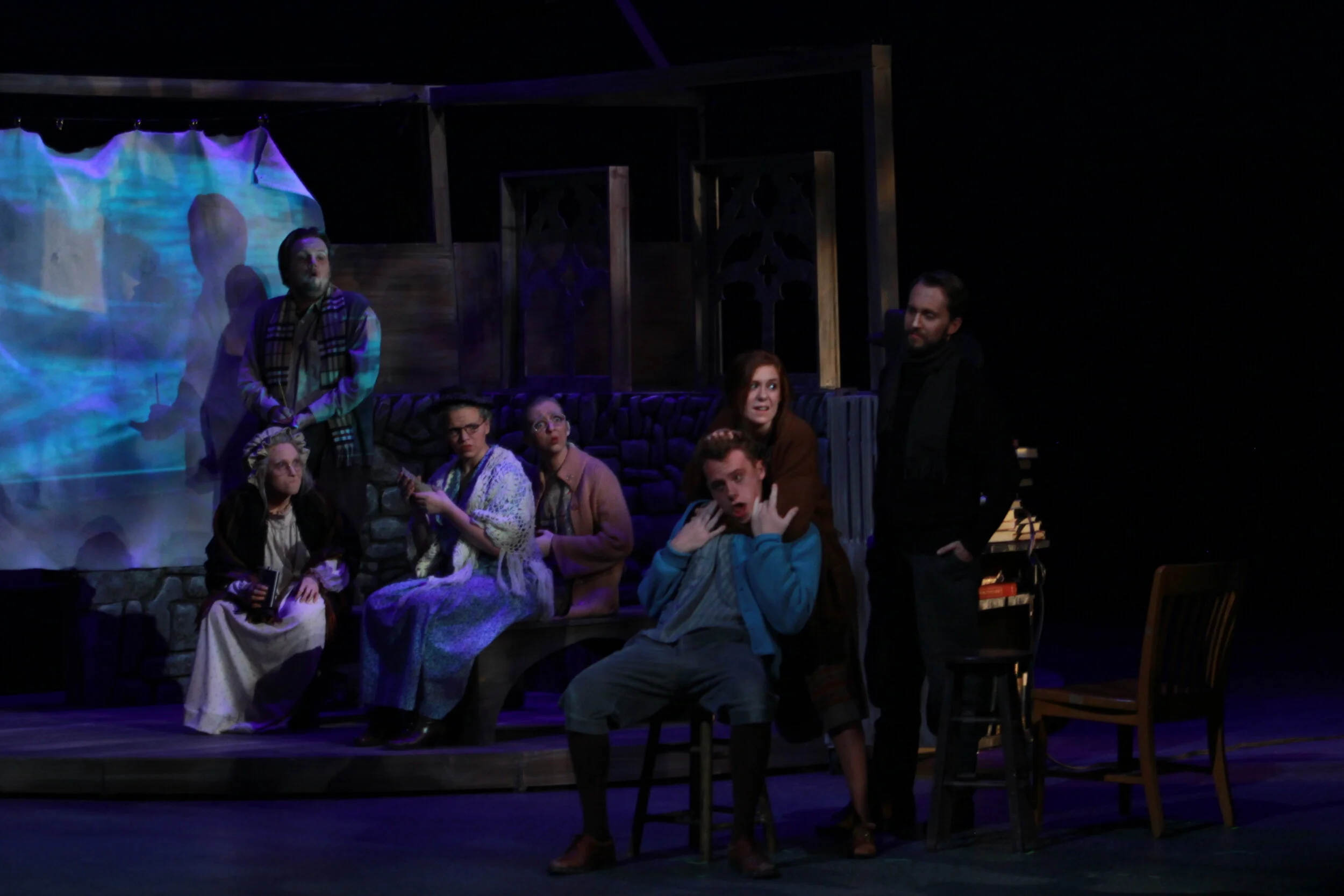
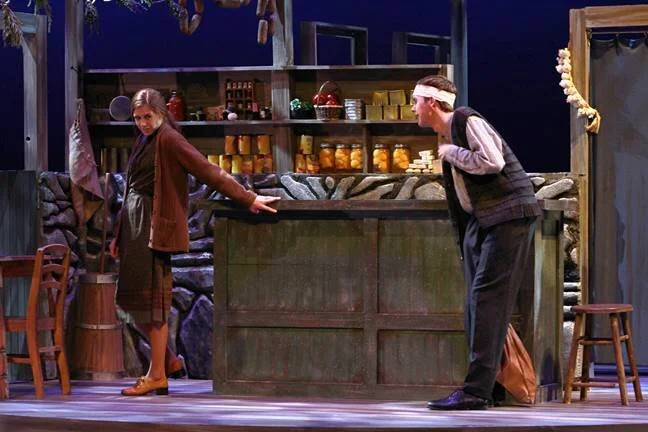
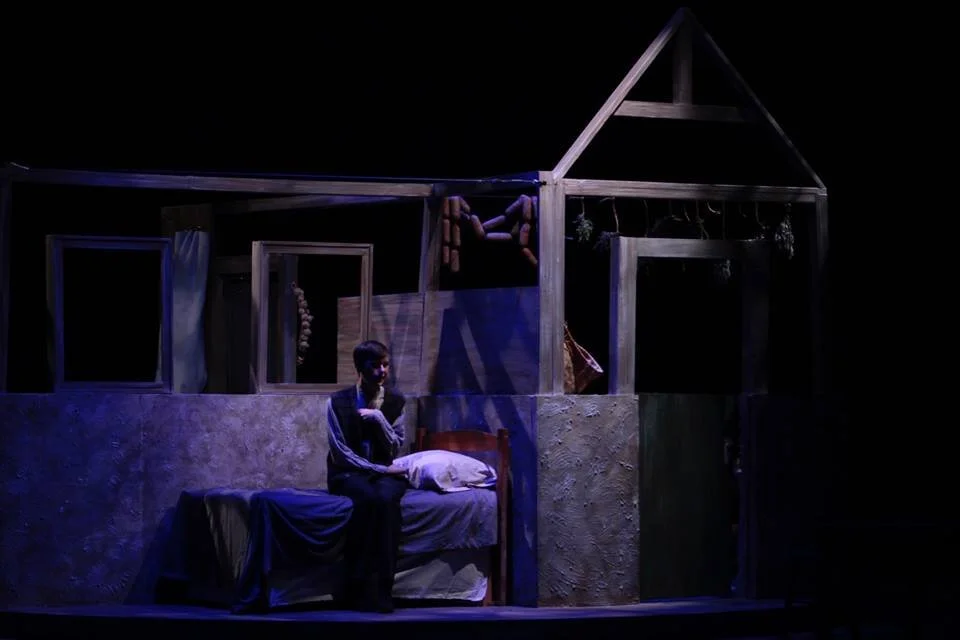
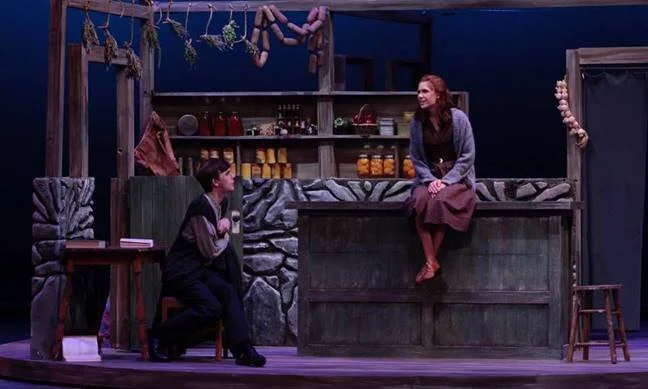
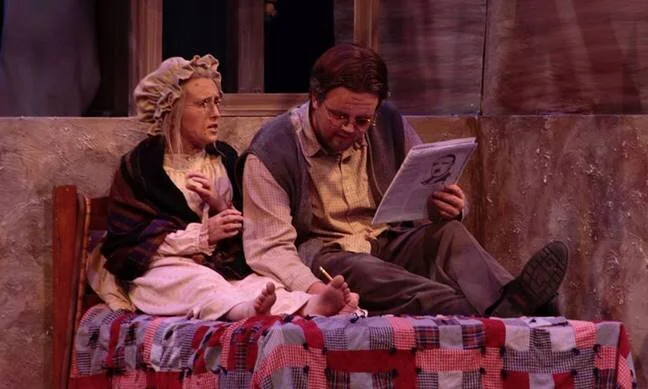
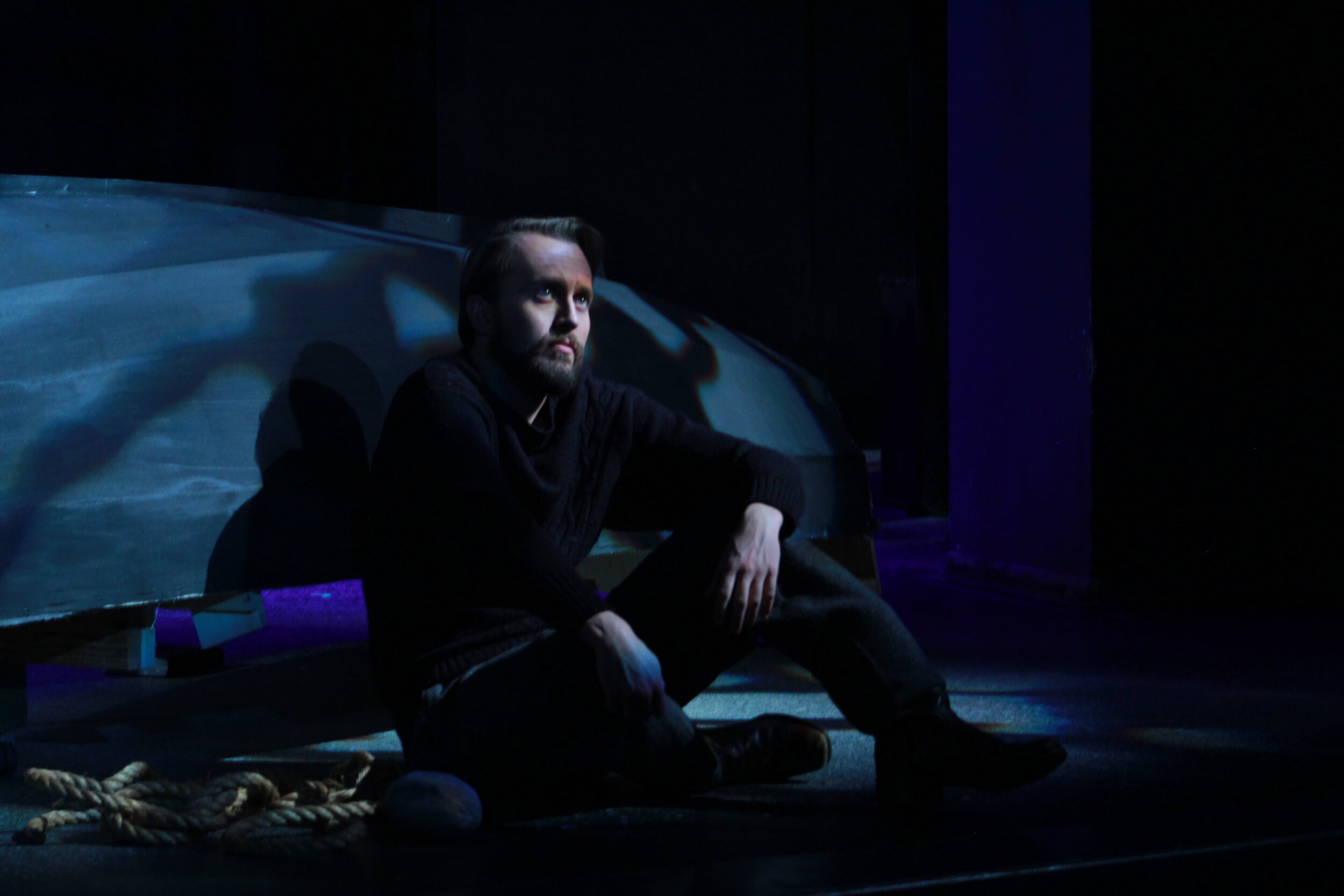
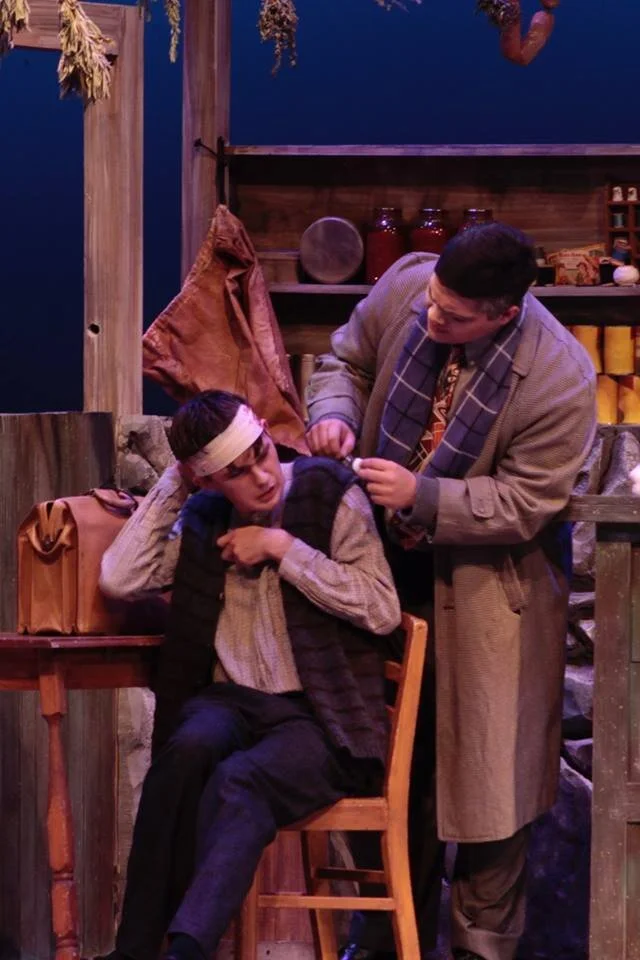
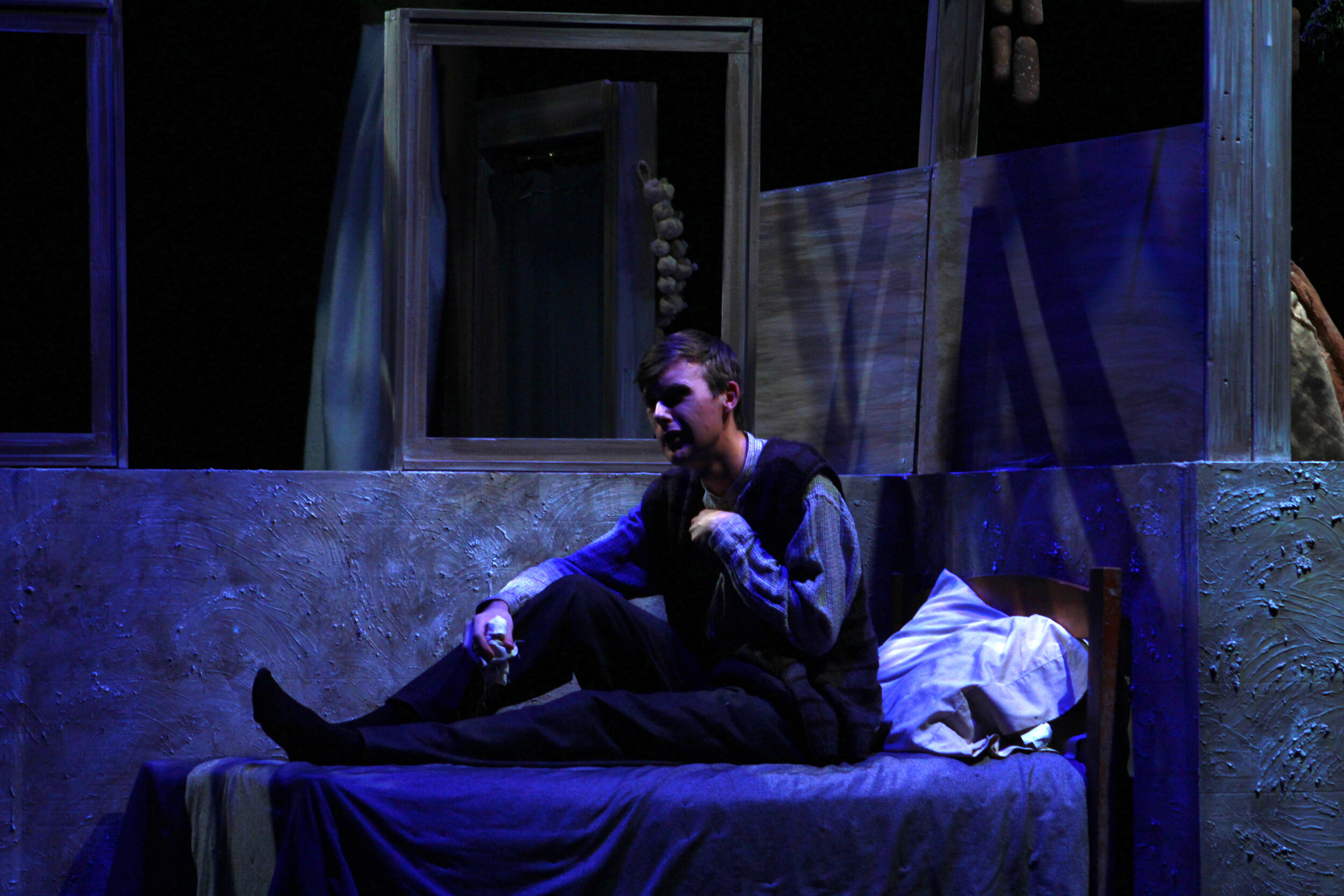
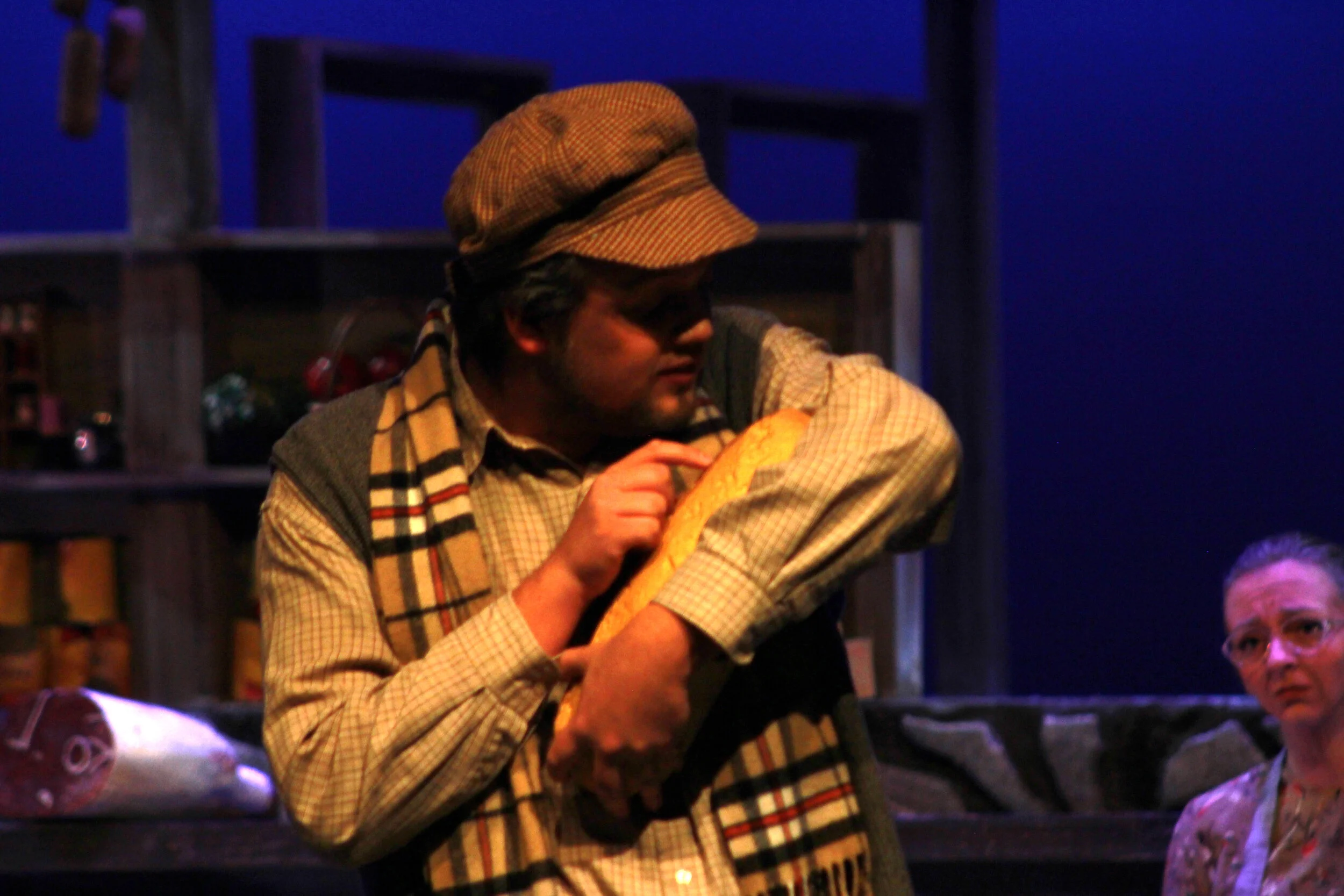
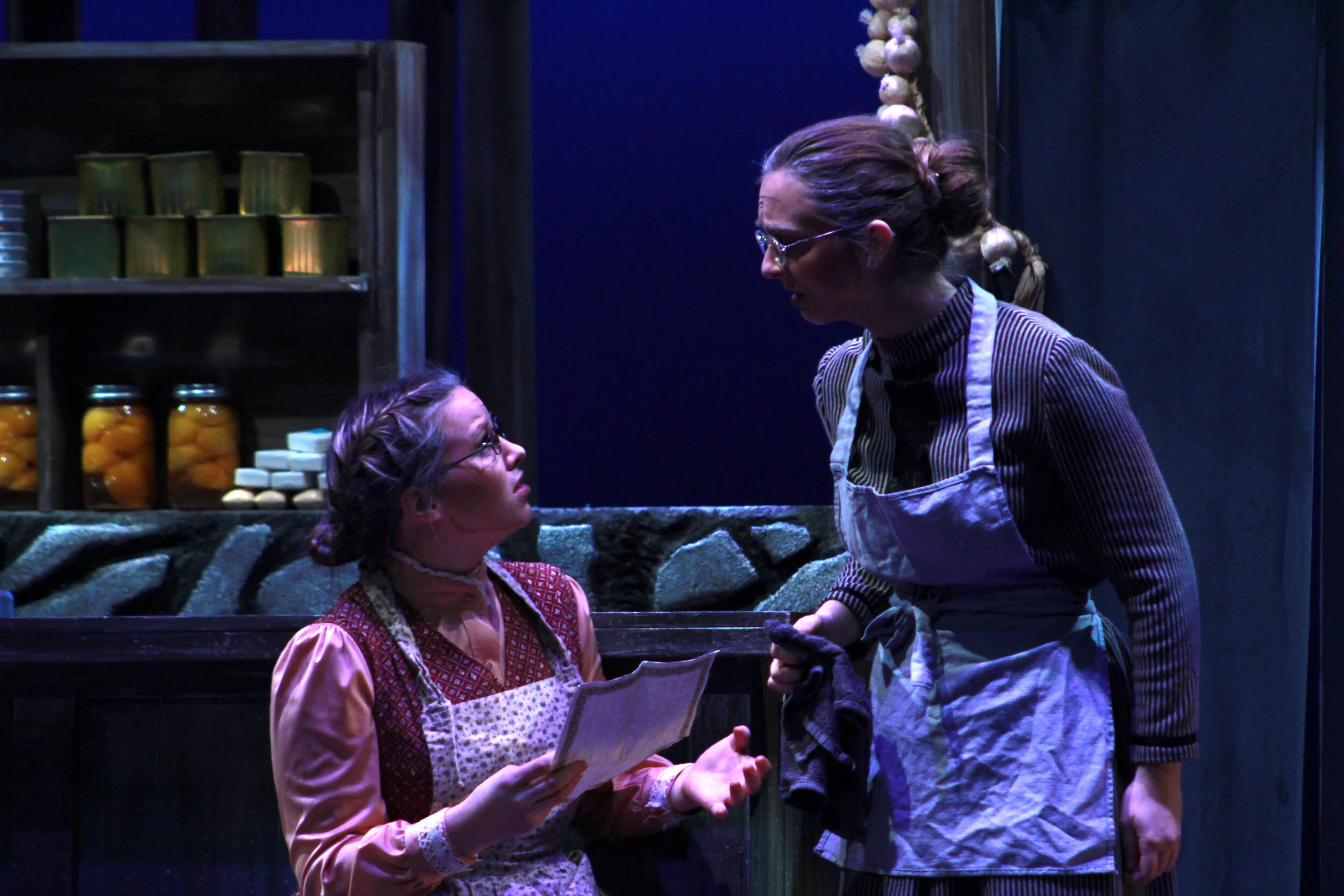
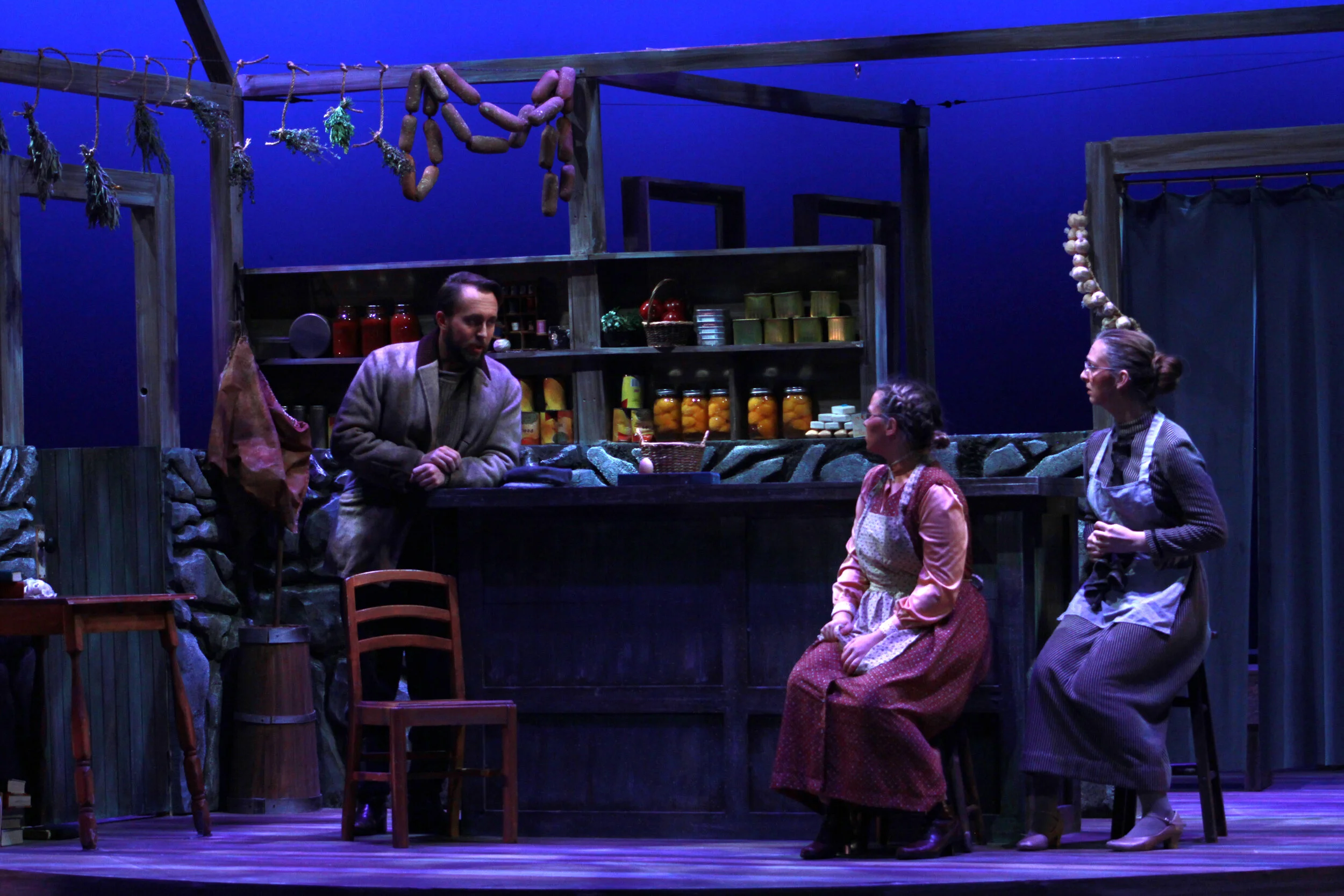
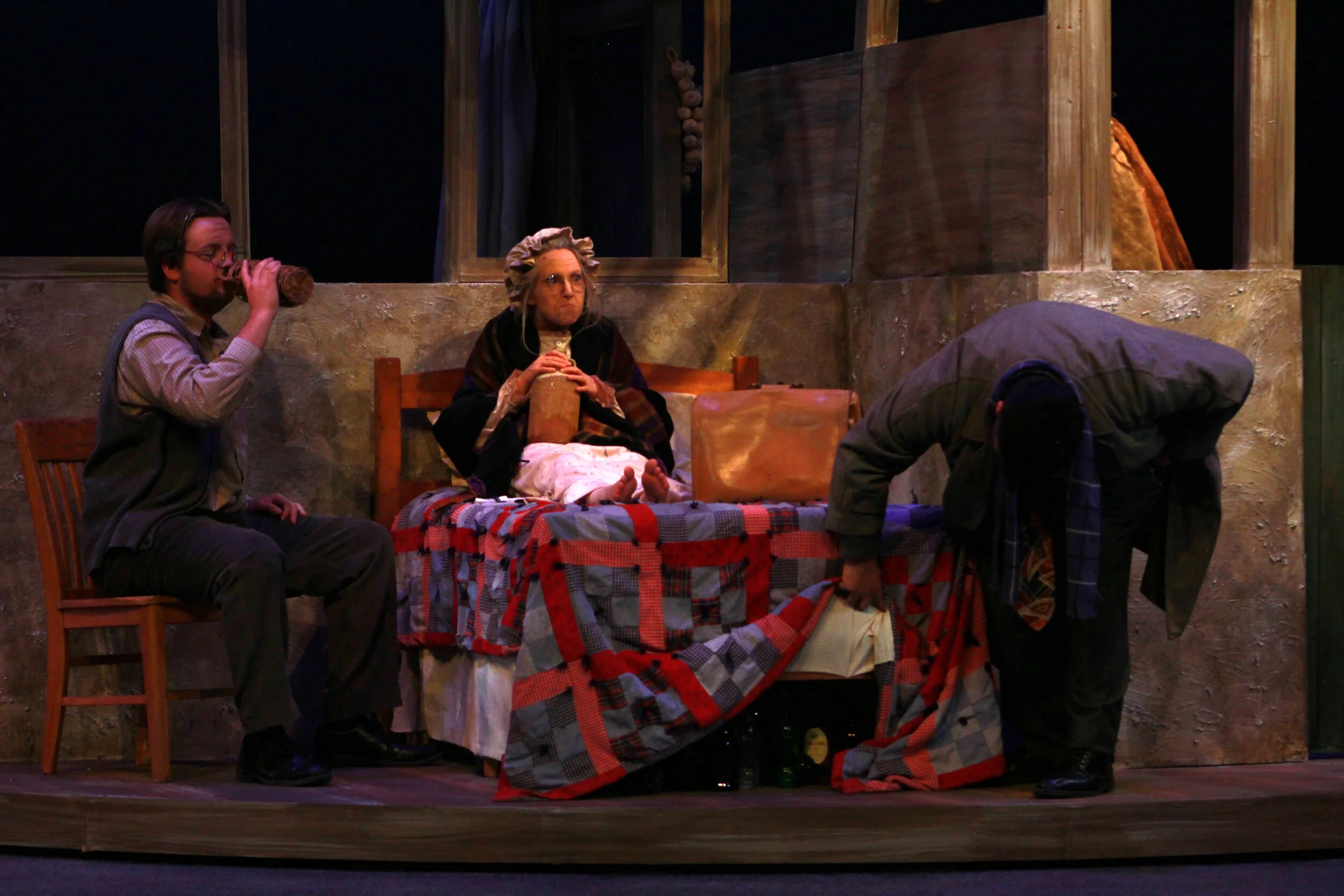
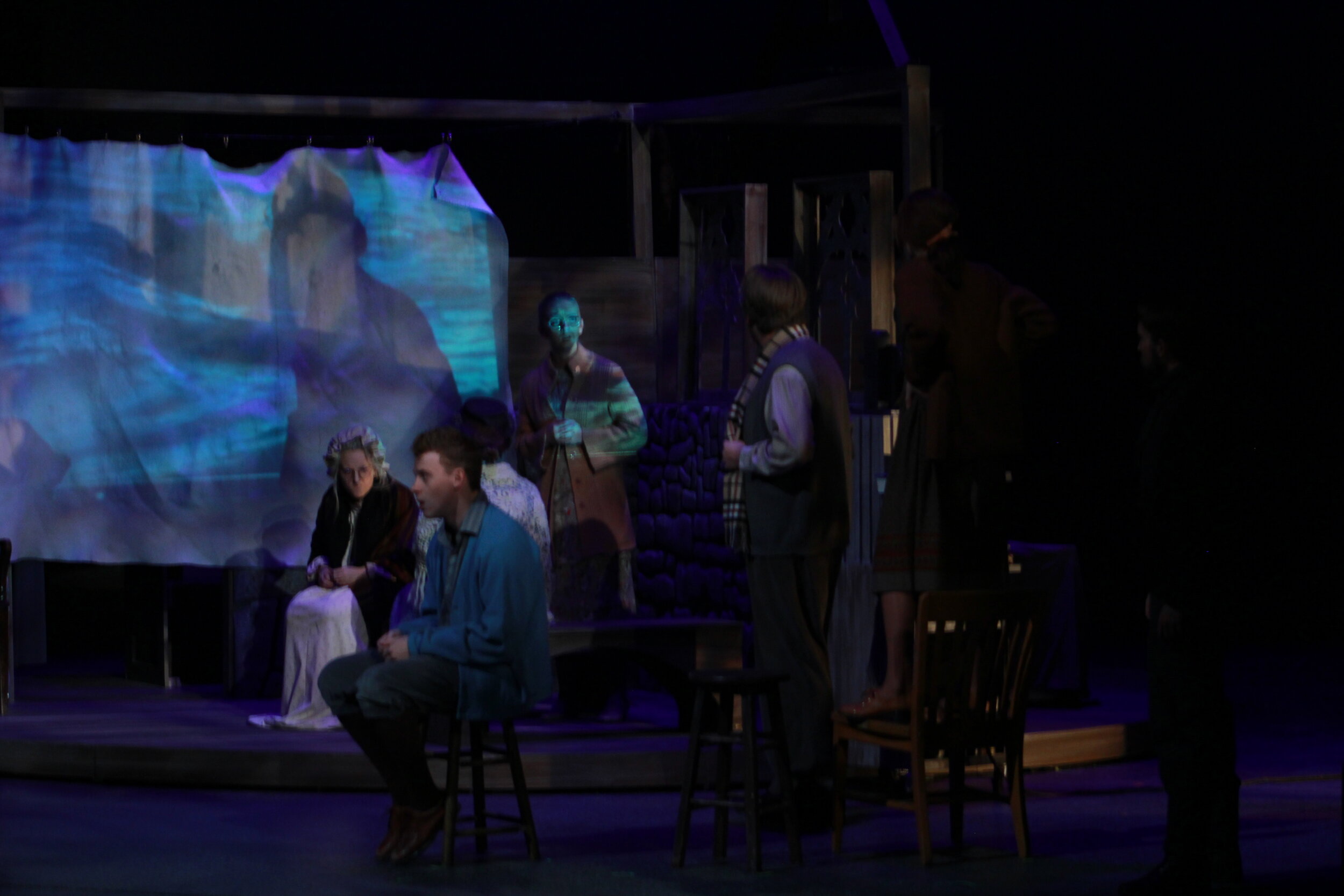
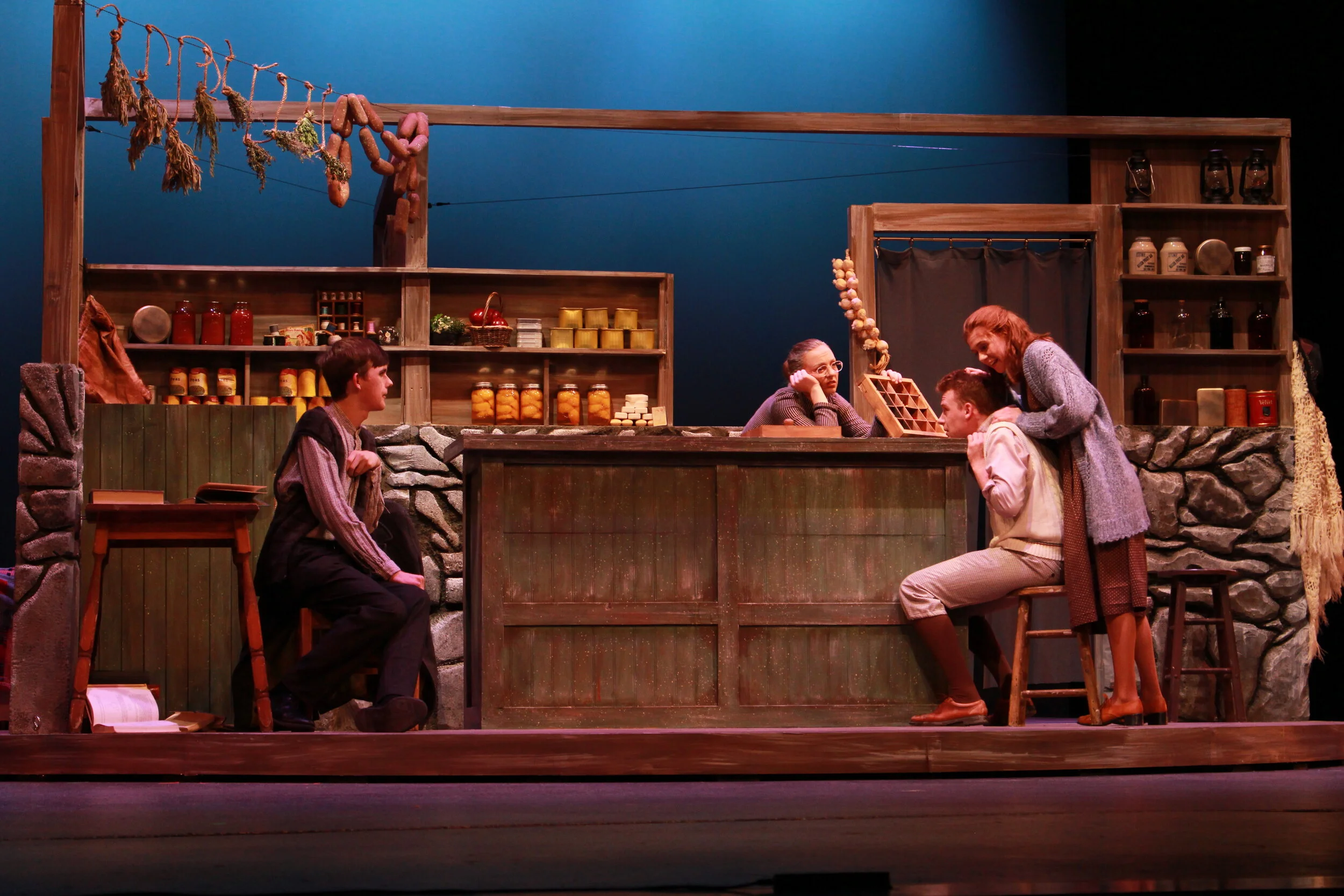
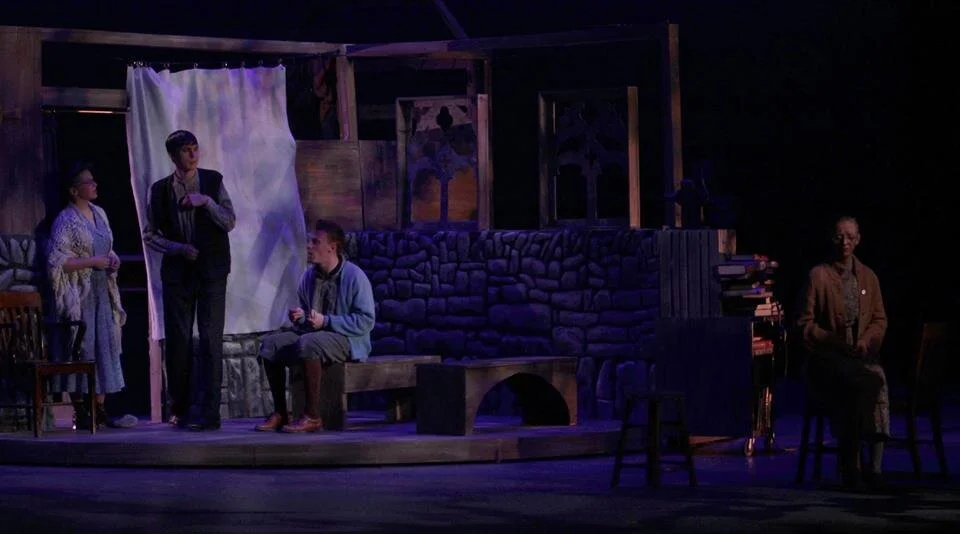
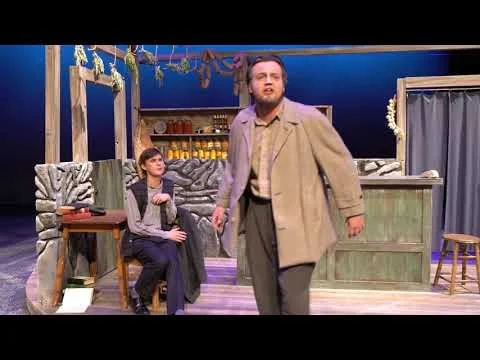
Invited scene, KCACTF REGION 8 Festival, Spring 2017
DIRECTOR’S NOTES
The Irish are storytellers. Perhaps it’s in our genes, and some blessed ancestor passed along a the gift of gab with his fair skin and green eyes. Perhaps the green lands and jagged seas of Eire themselves hold a bit of magic and myth. Perhaps it’s just, as a pragmatist might say, that any isolated rural community with centuries of tradition is likely to begin weaving a good yarn to help instill its values in new generations.
Or perhaps, as my own Irish mother might say, these stories are good fun and a bit of blarney.
Reasons aside, the Irish are prodigious and prolific storytellers. We recall the novels, poems, and satire of such Irishmen as James Joyce, William Butler Yeats, and Jonathan Swift. We might also thank the Irish for Dracula (Bram Stoker), Angela’s Ashes (Frank McCourt), and our secret hope that someday a wardrobe might transport us to Narnia (C.S. Lewis). And here in the theater, we should remember Oscar Wilde, Samuel Beckett, and George Bernard Shaw -- all counted not only as great Irish playwrights, but as some of the world’s greatest storytellers.
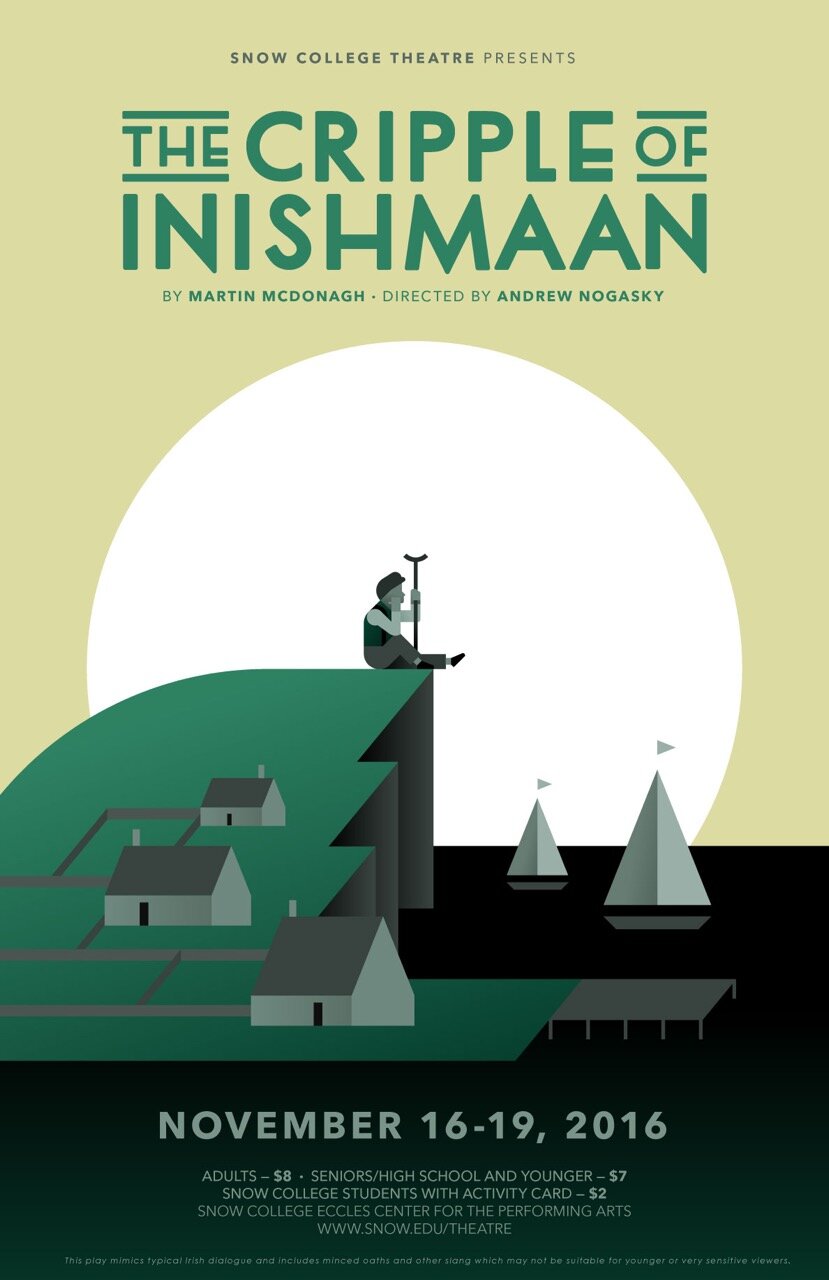
The Cripple of Inishmaan does not care a lick about these famous Irish storytellers. Instead, writer Martin McDonagh plunges us into the everyday storytelling that shapes small communities: stories a grandmother might spice with just a little more fiction than fact when recollecting family history; stories in books a desperate young mind might scour for for glimpses of a world outside her claustrophobic household; stories a villager might add a poetic fillip to when passing along gossip to his neighbors. McDonagh helps us see all Irish as natural tellers of tales, whether those tales be old stories of aunties long gone, juicy rumors of feuding neighbors, or the distant dreams of what may be. This storytelling spirit juggles fact and fiction together and illuminates the greater, more important truths that bind us together.
McDonagh sets The Cripple of Inishmaan on one of the three Aran Islands (Inishmaan, Inishmore, and Inisheer) -- isolated, hard, and nearly unfarmable craggy dots alongside the green of mainland Ireland where he spent his childhood holidays. The play is an artistic response to one of the biggest events that ever occurred in this remote part of the world. In 1934, Hollywood filmmakers came to the islands to film the now notorious The Man of Aran, a “documentary” that took extraordinary liberties to create the artificially primitive and “noble” struggles of an “authentically” Irish family. McDonagh’s The Cripple of Inishmaan is The Man of Aran’s counterargument: while the play makes no pretense of literal truth, it is a story of the Irish, by the Irish, and it shows them without the comfortingly familiar varnish of stereotype.
The Cripple of Inishmaan is at times unflinching, almost brutal, but at others it is washed with wit and embellishment. While no play can capture every nuance of any entire people, this one gives us as theatergoers a dark, humorous, and poignant look at the soul of the Irish, without prejudice or rose-tinted bias. The Cripple of Inishmaan provides us with an honest story, an authentic story -- a story worthy of Ireland.
Credits
Written by Martin McDonagh
Director: Andrew Nogasky
Dialect Coach: Andrew Nogasky
Assistant Director: AneUnhu Gwatidzo
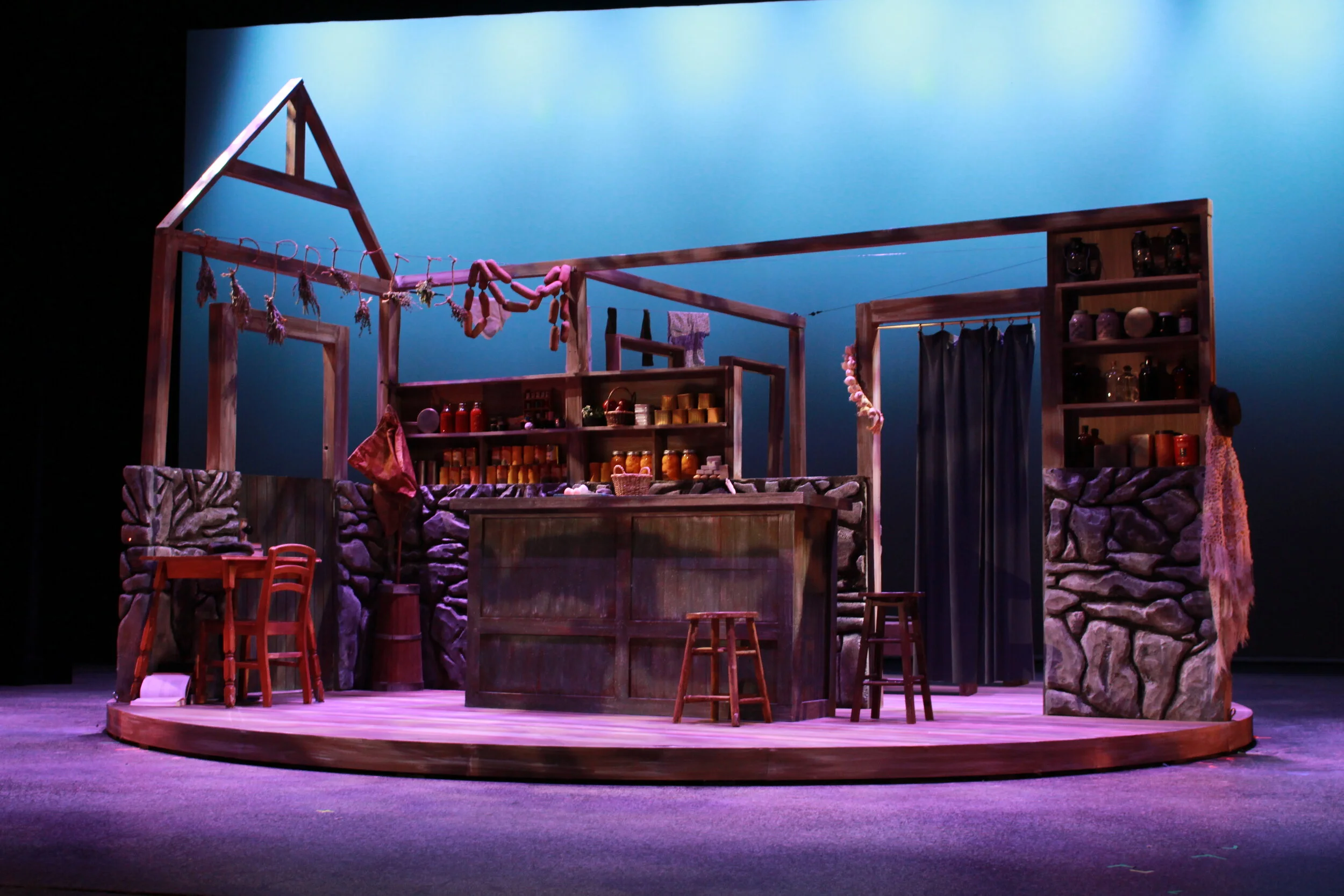
Scenic Designer: Milinda Weeks
Costume Designer: Kathleen Hansen
Lighting Designer: Milinda Weeks
Original Music: Sarah Insalaco
Photos provided by Milinda Weeks and Taylor Stewart