
ACTING I
This course introduces terminology, improvisation, script analysis and interpretation, body movement, vocal production, and ensemble acting. Students are introduced to the art of acting primarily through practice, beginning with activity work and progressing to monologues and scene work with a partner. Our focus is on understanding and mastering basic skills that will allow students to begin experiencing truthful behavior in performance.
SYLLABUS (Fall 2019)
STUDENT EVALUATIONS (Fall 2018)
ACTING II
This course expands upon and explores the craft of acting through practical experience and studio activities that deepen understanding of acting techniques and add to the actor’s toolbox. Particular focus is placed upon psychophysical explorations and character work/creation. Students learn both through in-class activities, monologues, and scene work and written self-assessments that reflect upon their performance.
STUDENT EVALUATIONS (Spring 2019)
acting for the camera

This course helps the student to begin to learn the adjustments and practices most effective for acting in front of the camera, from hitting your mark to the foundational acting techniques, screenwriting structure, production process, internal work, and relationship to the camera. This course is intended to introduce students to the fundamental techniques, tools, and terminology for screen acting. Expanding upon the fundamentals learned in previous acting classes, Acting for the Camera applies performance work for “on camera.”
SYLLABUS (Spring 2022)
SCRIPT ANALYSIS
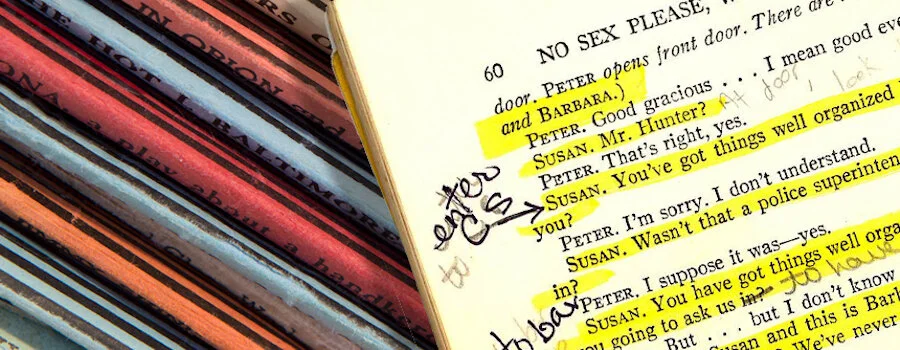
How do you begin to interpret a play without seeing it performed? This class introduces the structures, elements, and analysis of dramatic text with an eye toward applied use by the actor, designer, technician, and director — giving students the tools to take a play from the page to the stage. Students are expected to put their skills into practice through frequent written assignments examining one or more aspects of a script.
SYLLABUS (Fall 2019)
STUDENT EVALUATIONS (Fall 2018)
voice & diction
This course is a multi-faceted approach to healthy vocal production, diction and dialect, providing students with both the theory and practice of excellent speech function and expressive communication. Students learn the anatomy of the vocal tract and study the International Phonetic Alphabet, thereby building the basic skills necessary to project their voice healthfully in large spaces and to begin approaching accents and dialects.
SYLLABUS (Spring 2019)
STUDENT EVALUATIONS (Spring 2019)
THEATRE directing

TThis course is an analysis and laboratory application of theories of stage direction as art and craft. Particular emphasis is placed upon the director as an interpretive artist, acting coach, and administrator/manager. Students demonstrate their learning through direction of short plays.
SYLLABUS (Spring 2019)
STUDENT EVALUATIONS (Spring 2019)
THEATRE CAPSTONE
This course provides students concentrating in theatre with an opportunity to demonstrate mastery of the concepts and skills necessary to continue their study or to embark professionally. The course is project-based: students are expected to develop projects that showcase their abilities and to present those projects in a public forum, either live or online. Examples include solo performances, audio or video recording of works, or the preparation of an online portfolio.
STUDENT EVALUATIONS (Fall 2018)
THEATRE HISTORY & LITERATURE: Classical
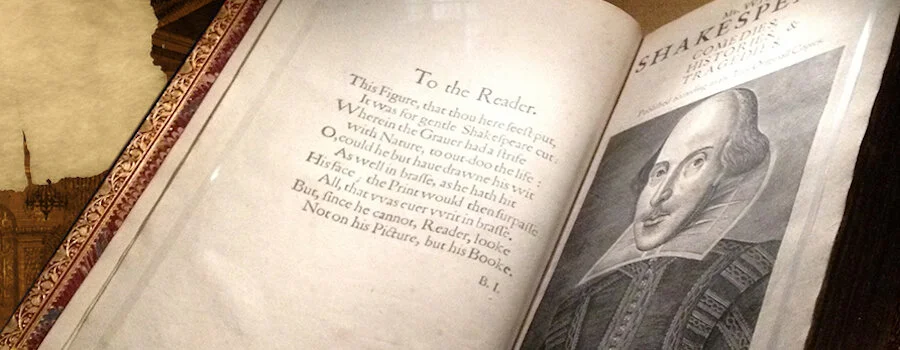
This course is an exploration of the principal literary periods and styles of drama from the ancient Greeks through the late Renaissance. Students examine the evolution of Western theatre from its rise in antiquity to its more familiar modern form, investigating how it has changed in its structure, subject matter, and manner and place of performance, as well as how those changes reflect and relate to the roles theater has played in various societies and the changing cultural attitudes toward theater itself. Students demonstrate their knowledge through a “style swap” exercise where they explore how they would transform a play from one time and play to another (e.g., converting an Old Greek Comedy to a Comedy of Manners).
SYLLABUS (Spring 2020)
STUDENT EVALUATIONS (Spring 2019)
THEATRE HISTORY & LITERATURE: modern
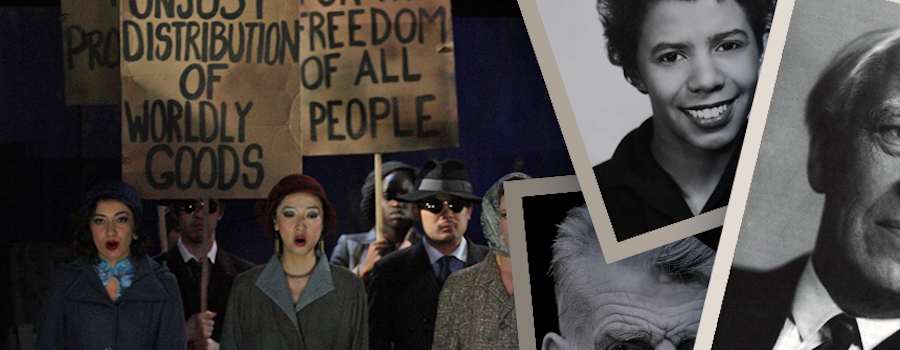
This course is an exploration of the principal literary periods and styles of drama from the nineteenth century through the theatre of today. Students will examine the rise of realism, modernity and postmodernity in theatre through the critical lenses of structuralism, semiotics, and identity. The course will investigate changes in written form as well as the role these works played in society, the physical spaces in which they were performed, the manner in which they were acted, and cultural attitudes toward the art form itself. Students are expected to demonstrate their knowledge through a final project that “breaks down” a play’s relationship to modern theatre history, including an examination of its presentation of such topics as gender, race, sexual orientation, and political discourse.
SYLLABUS (Spring 2022)
STUDENT EVALUATIONS (Spring 2019)
CONVERSATIONS IN INTERSECTIONALITY & GENDER

This foundations course is an exploration of gender and sexual orientation through human development, literary narrative, and media depictions. Both interior and exterior perspectives help shape our sense of self, and those perspectives can be magnified, manipulated, or distorted as we experience the world around us. We will look specifically for where identity is created, defined, and reflected. While this class focuses primarily on gender and sexual orientation, we will also examine the many overlapping and interdependent systems of discrimination and power (such as race, ethnicity, and class) that shape our ideas about who we and others are.
SYLLABUS (Spring 2020)