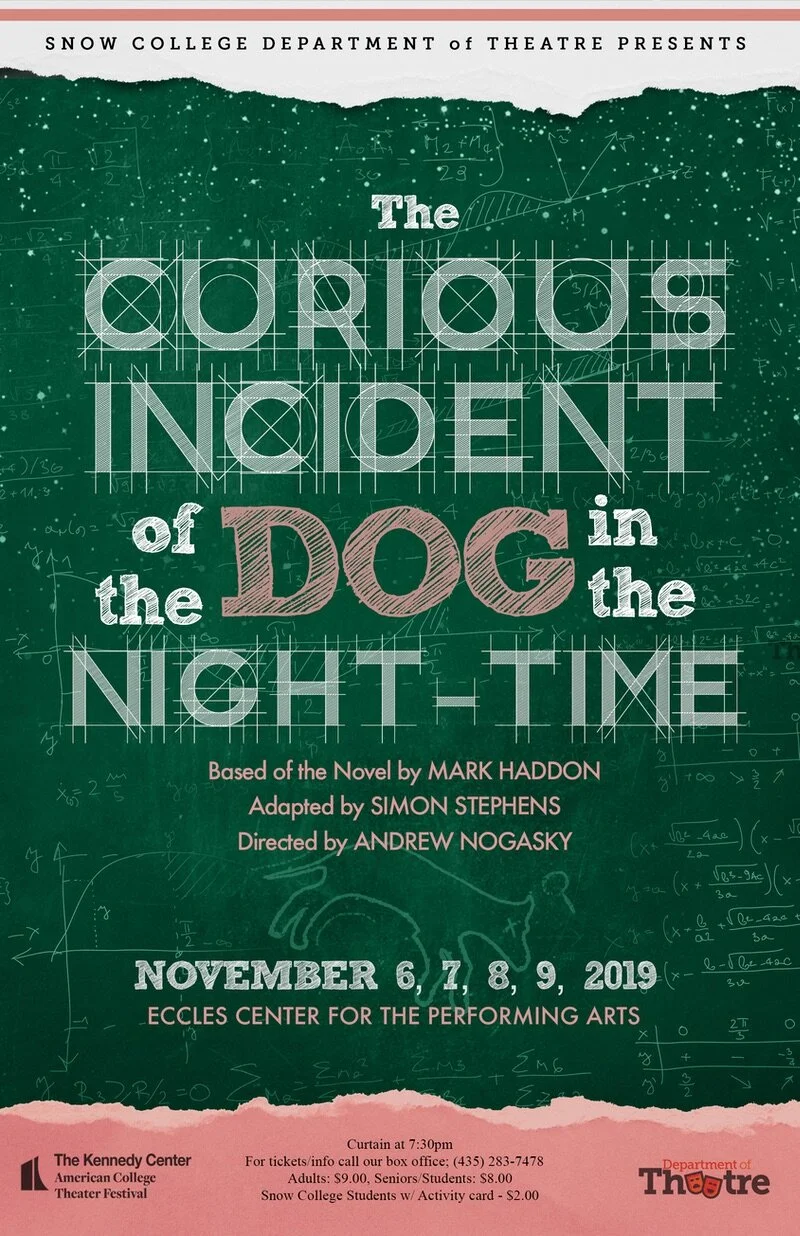
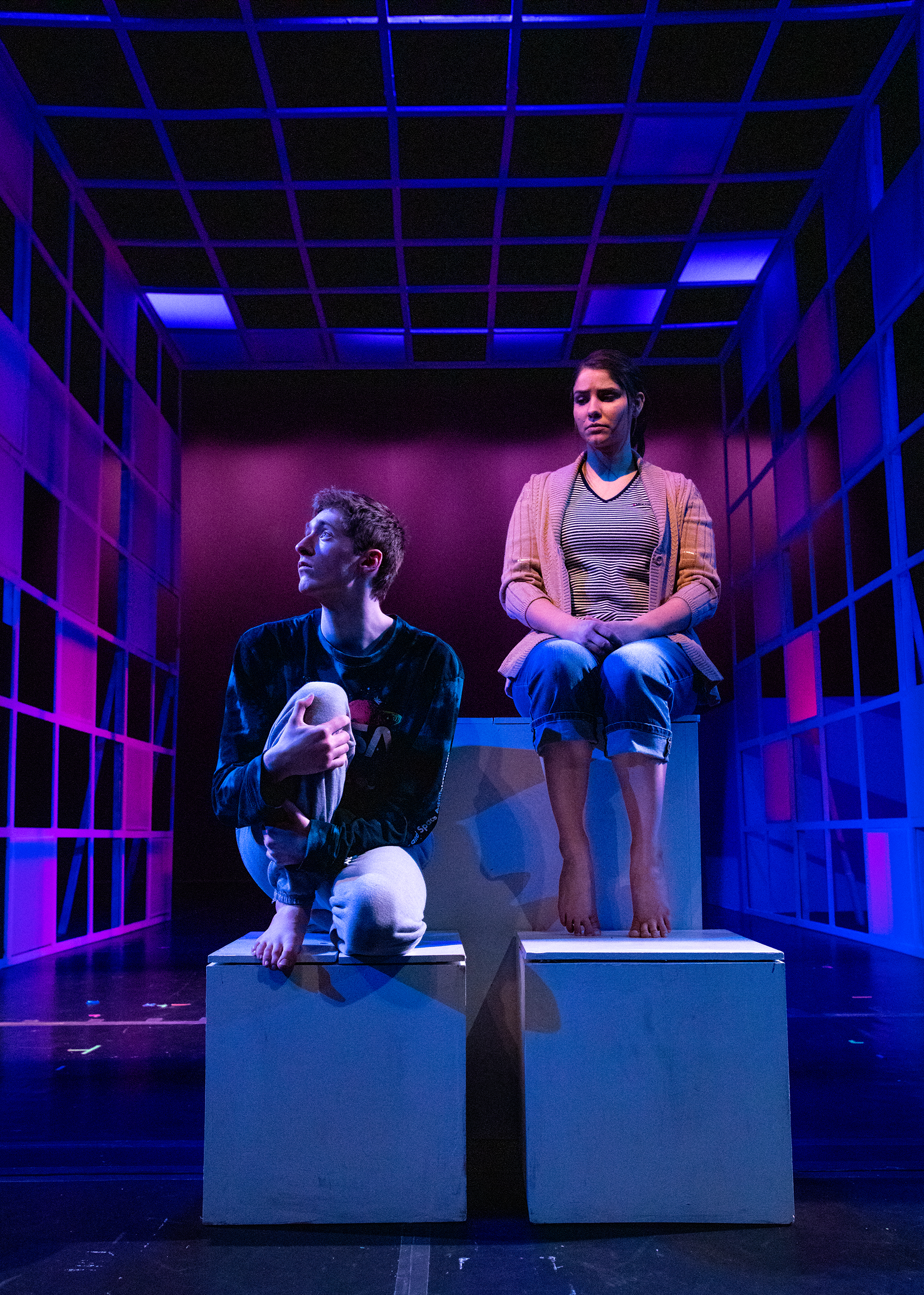
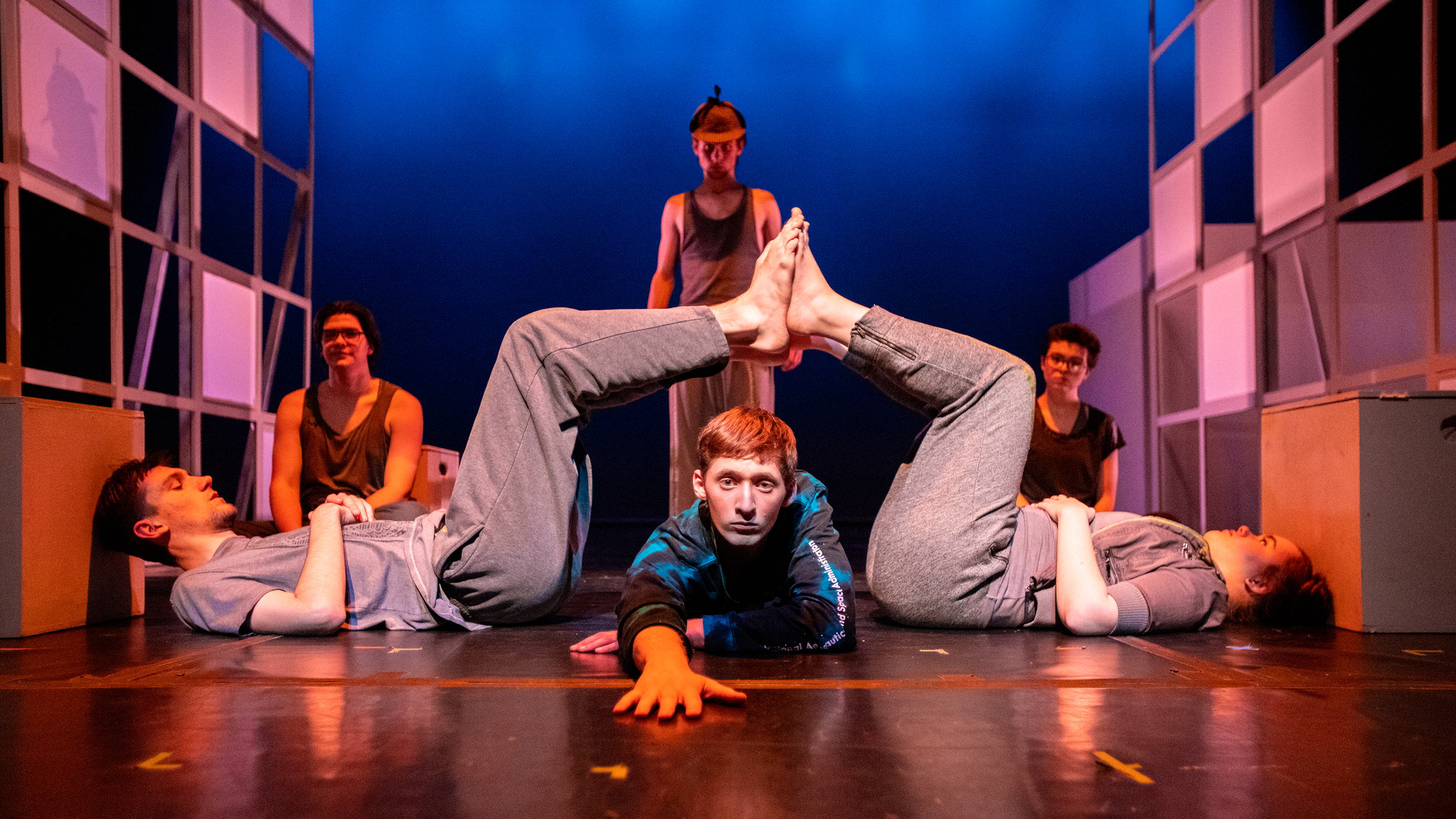
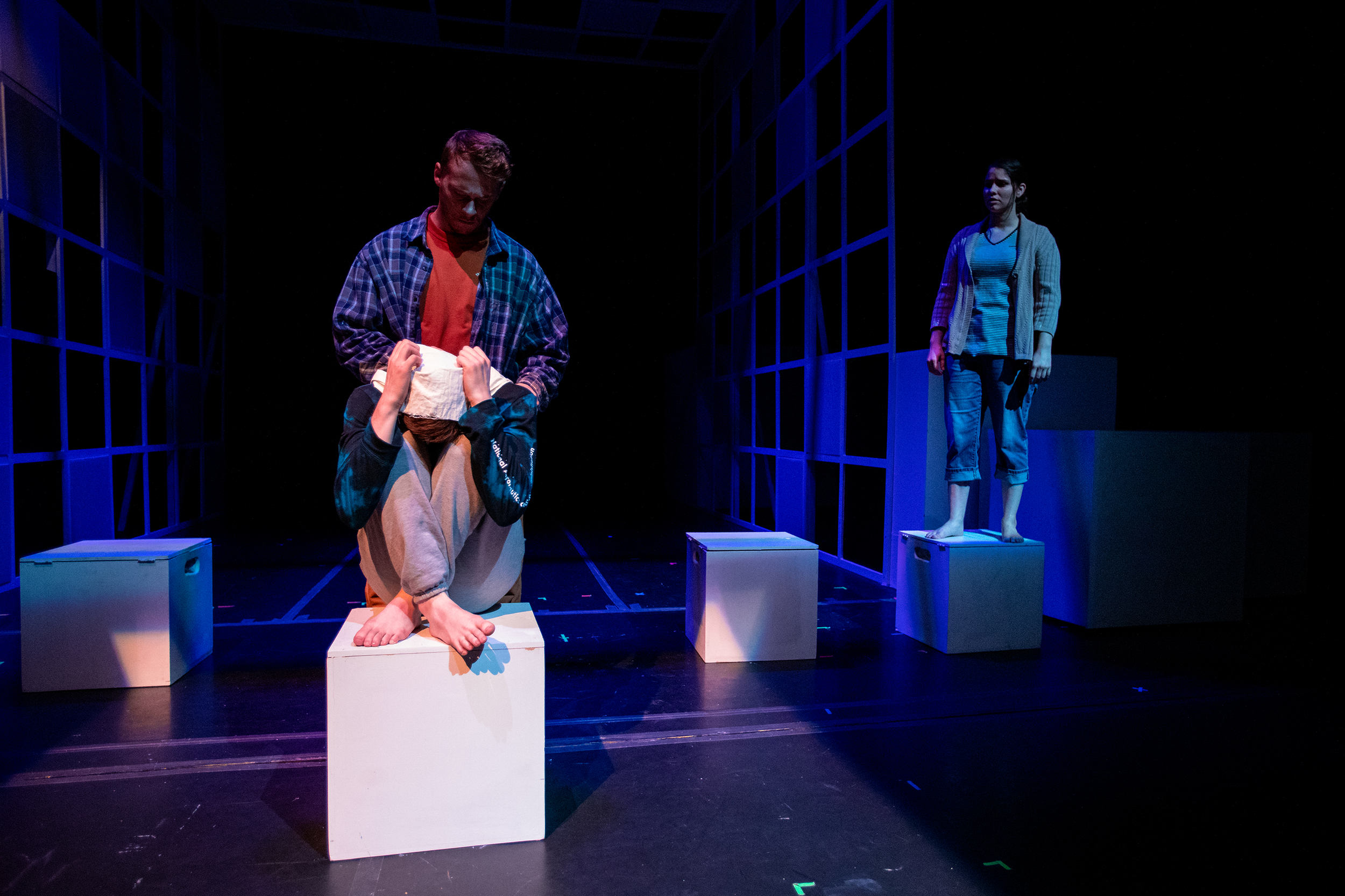
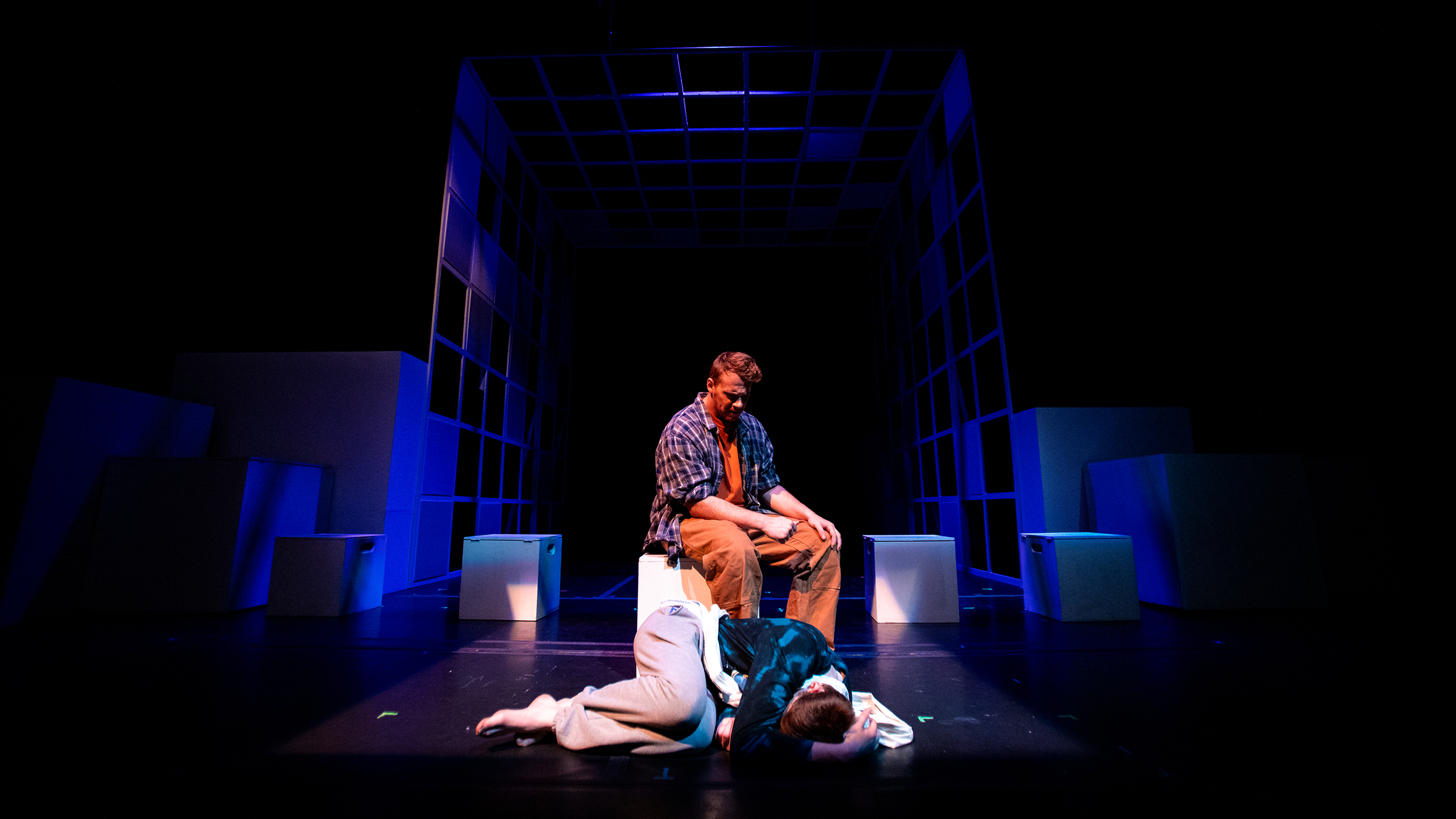
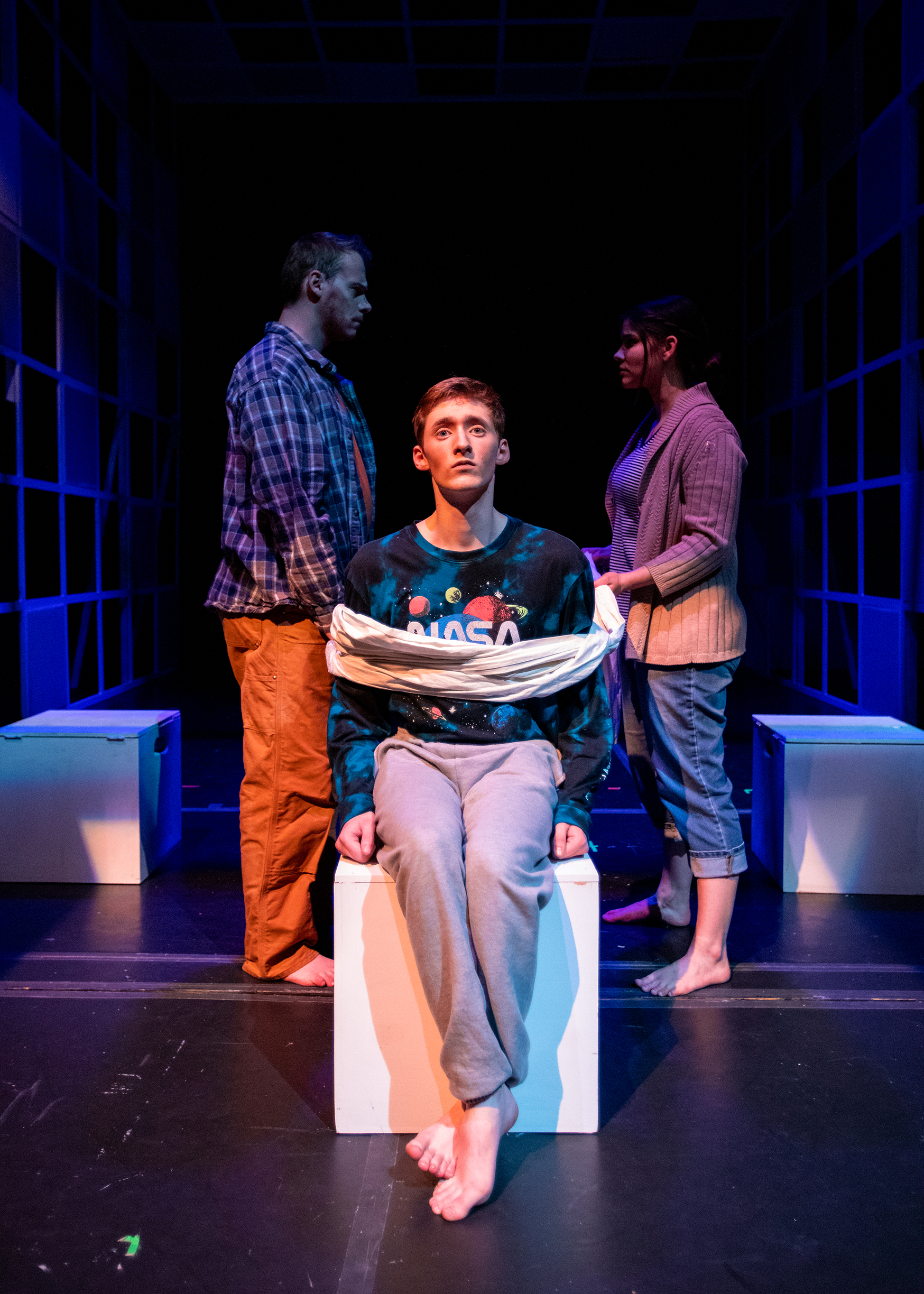
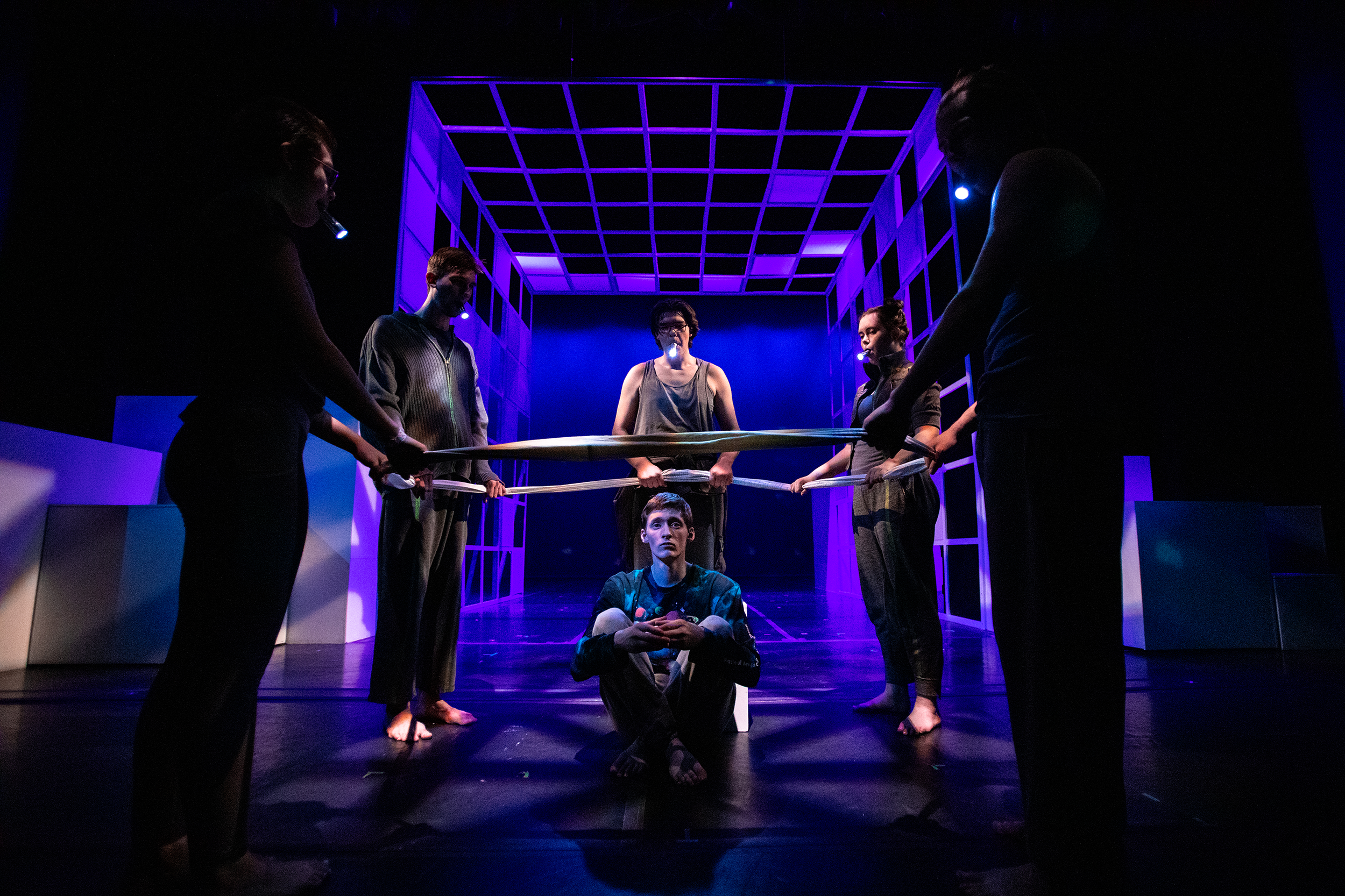
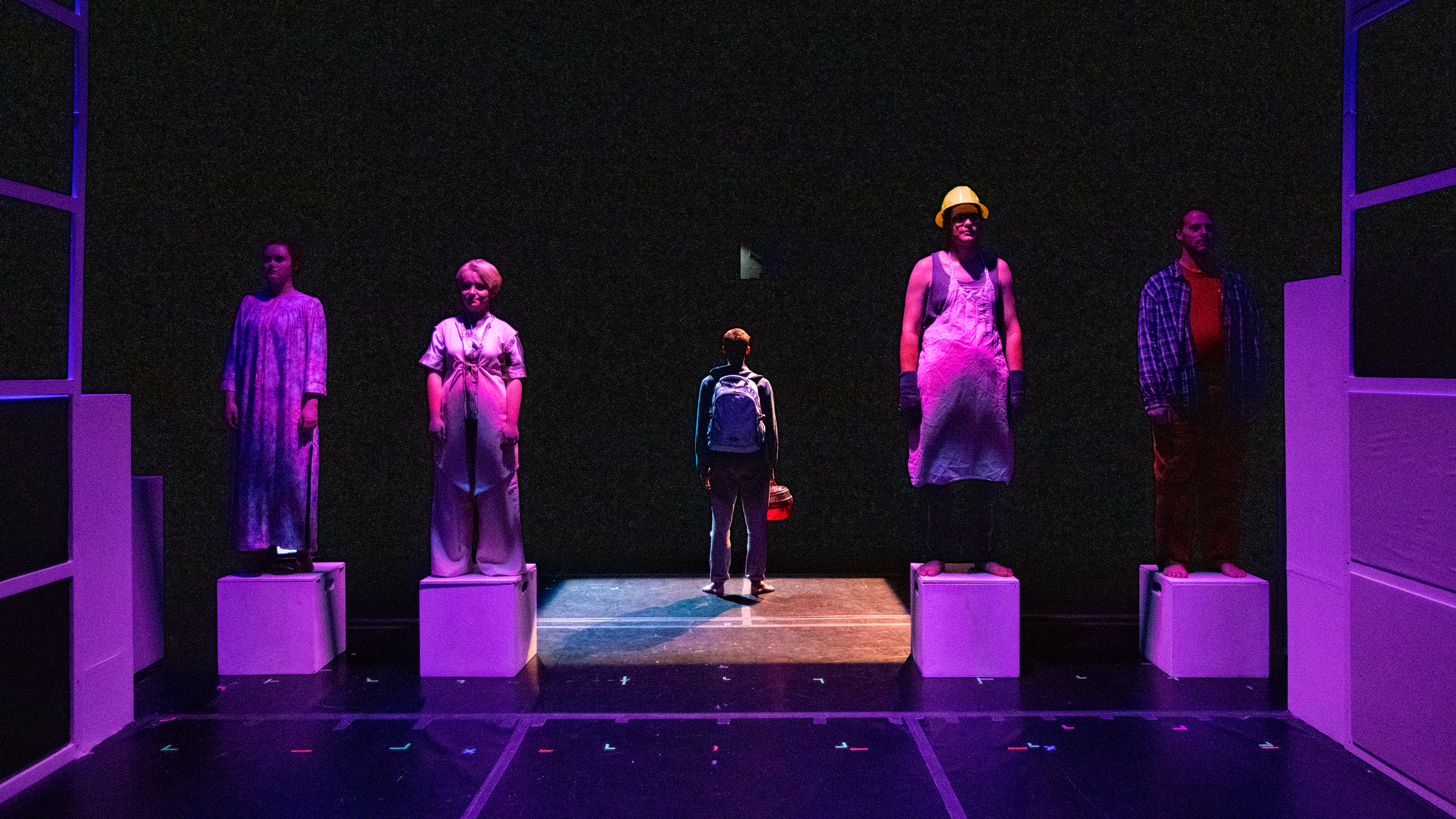
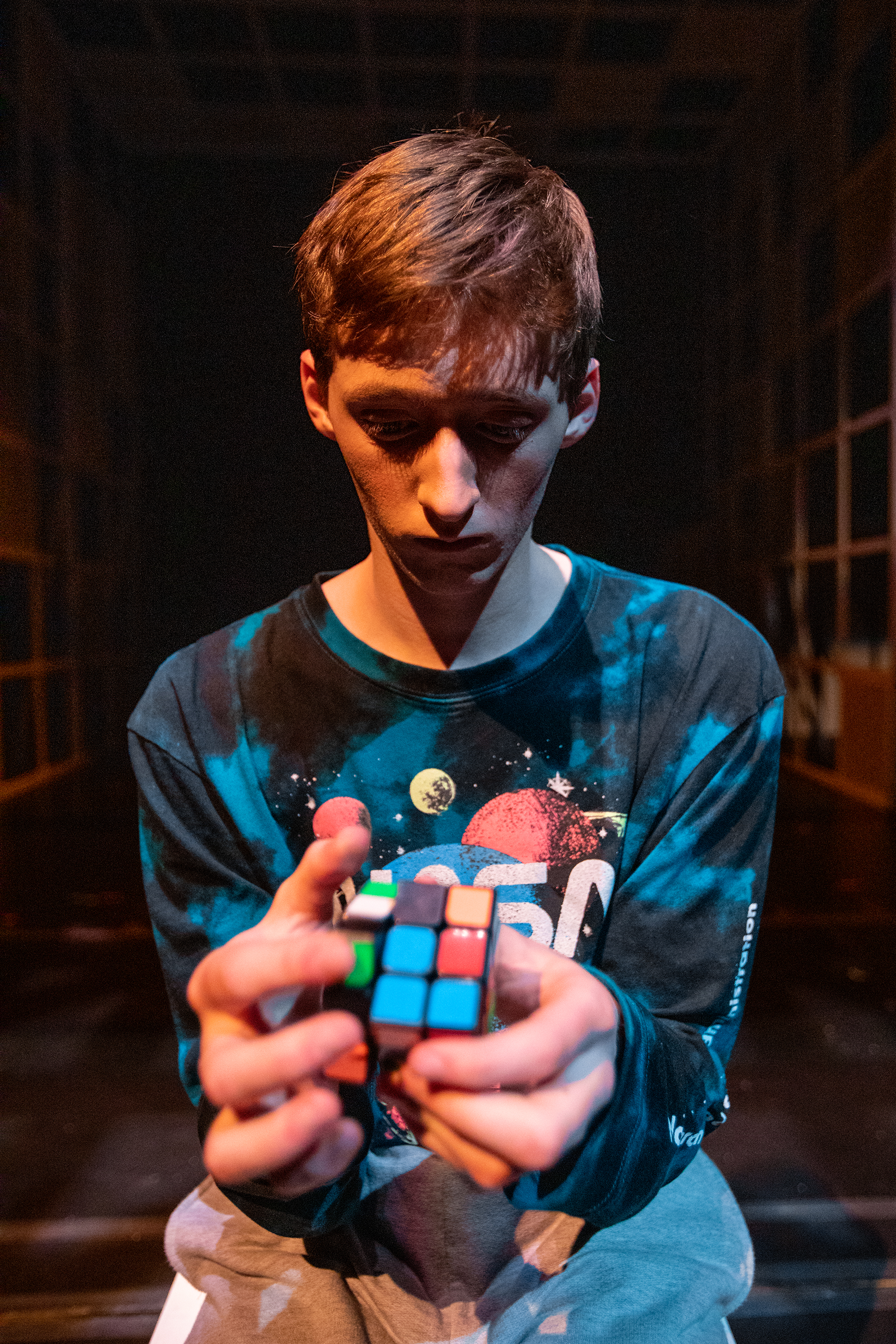
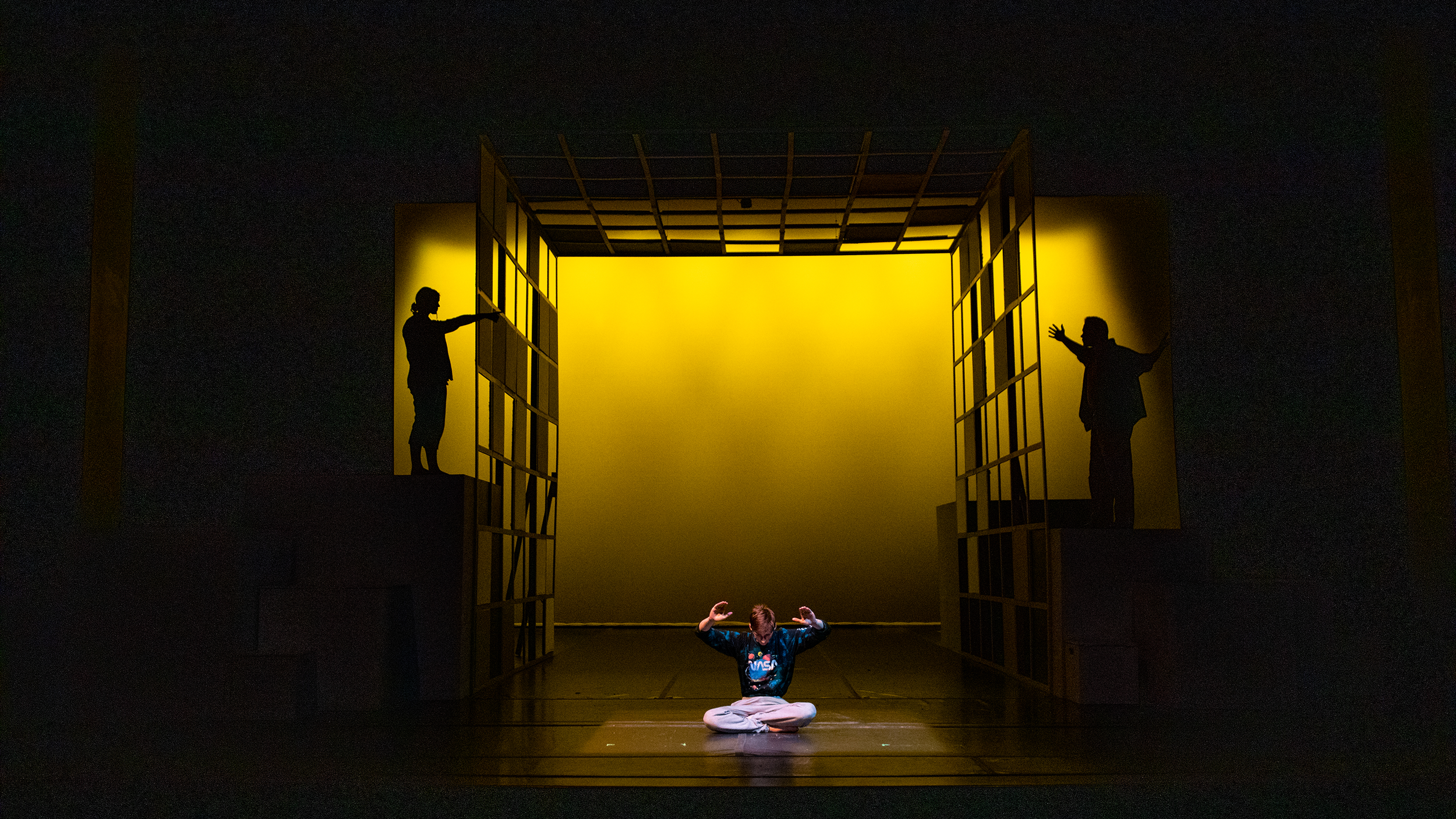
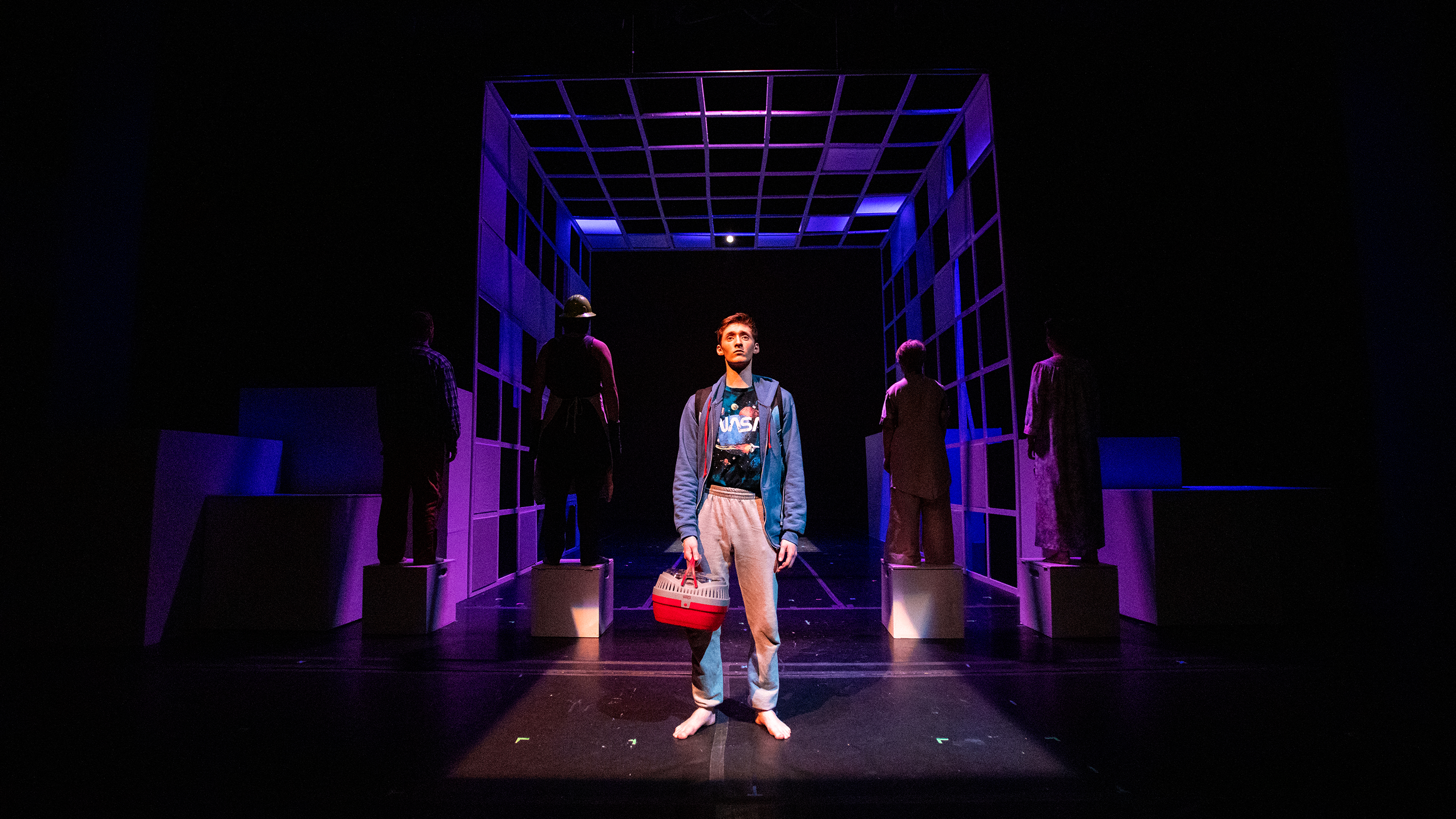
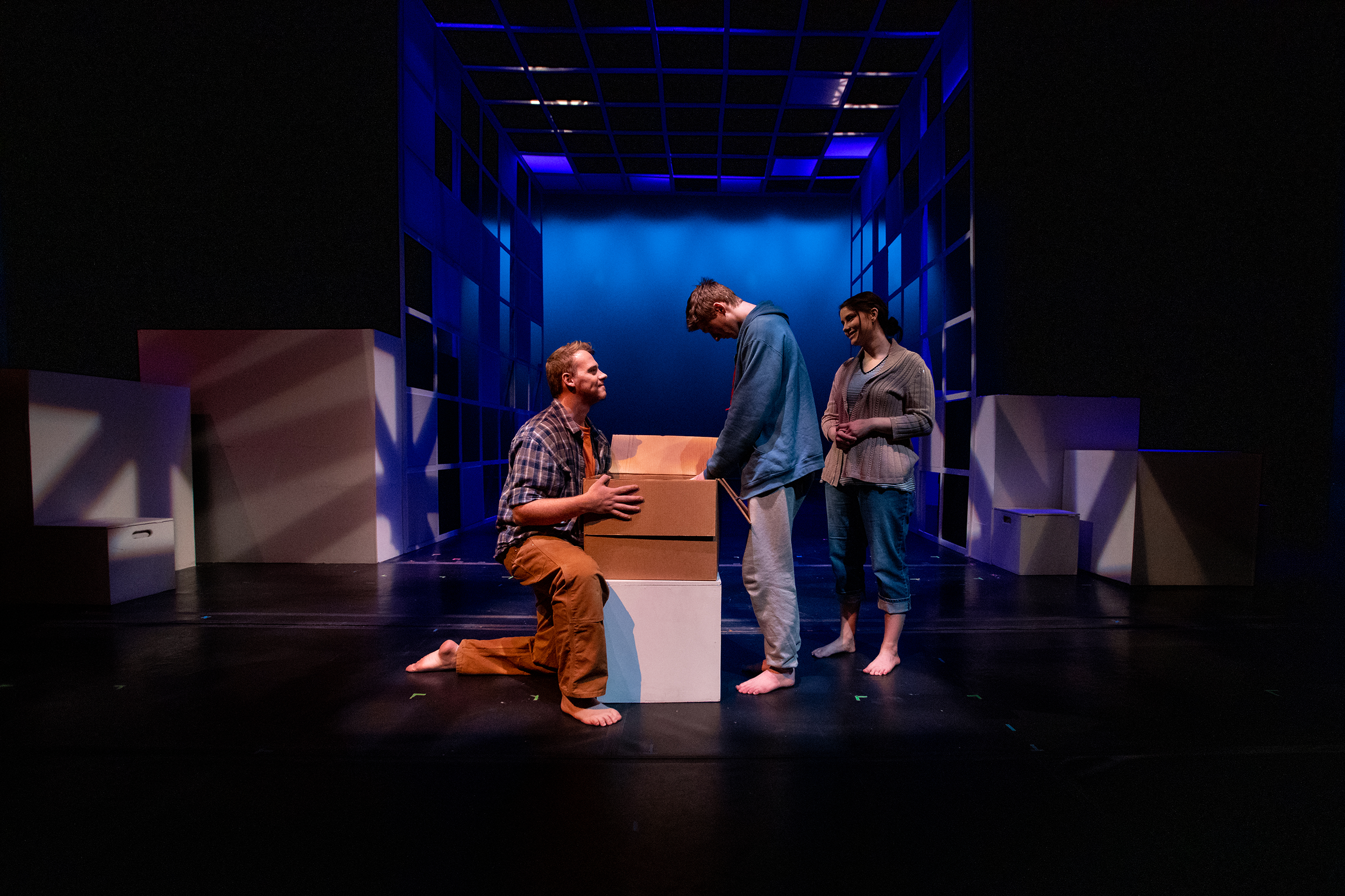
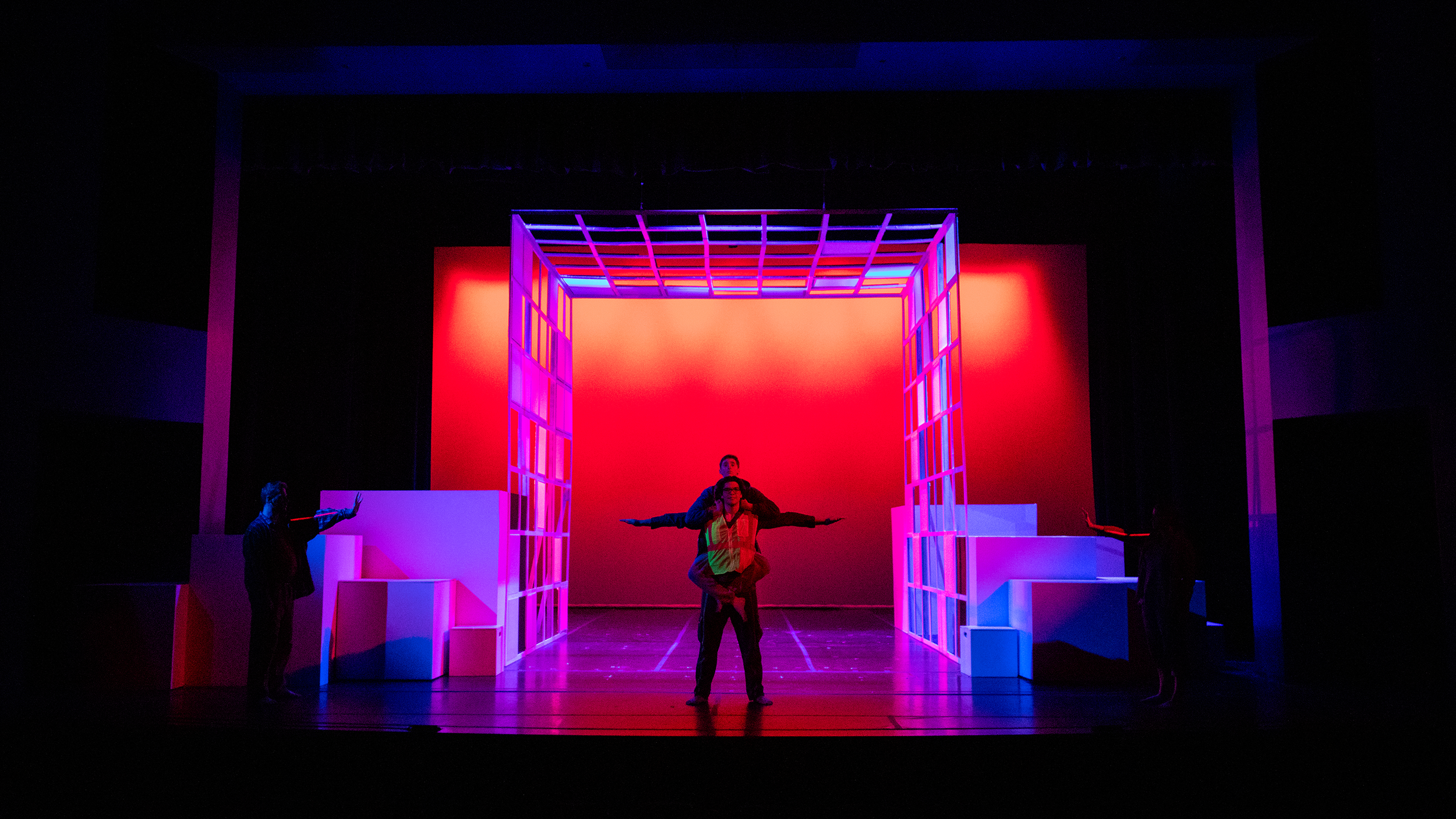
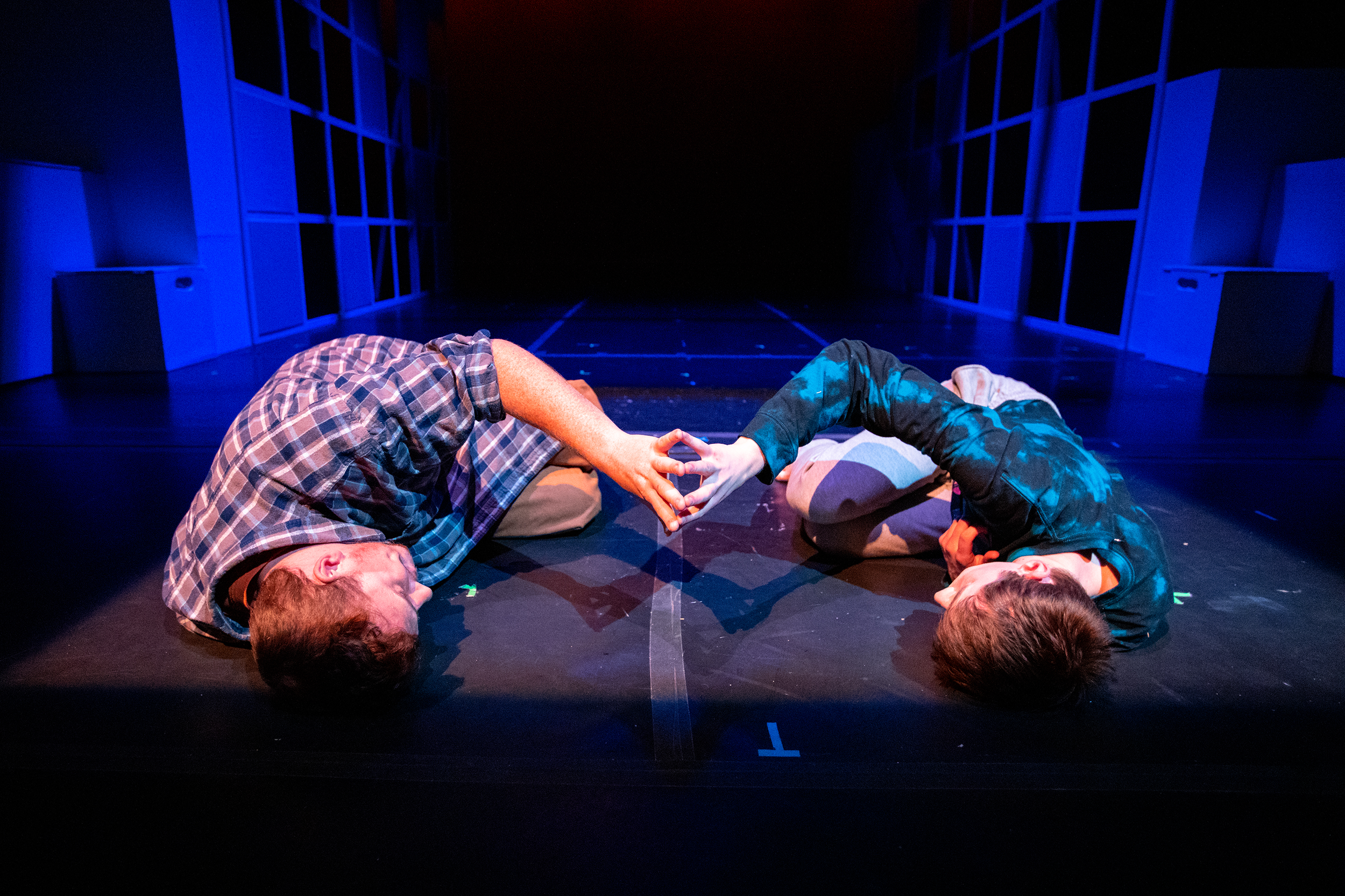
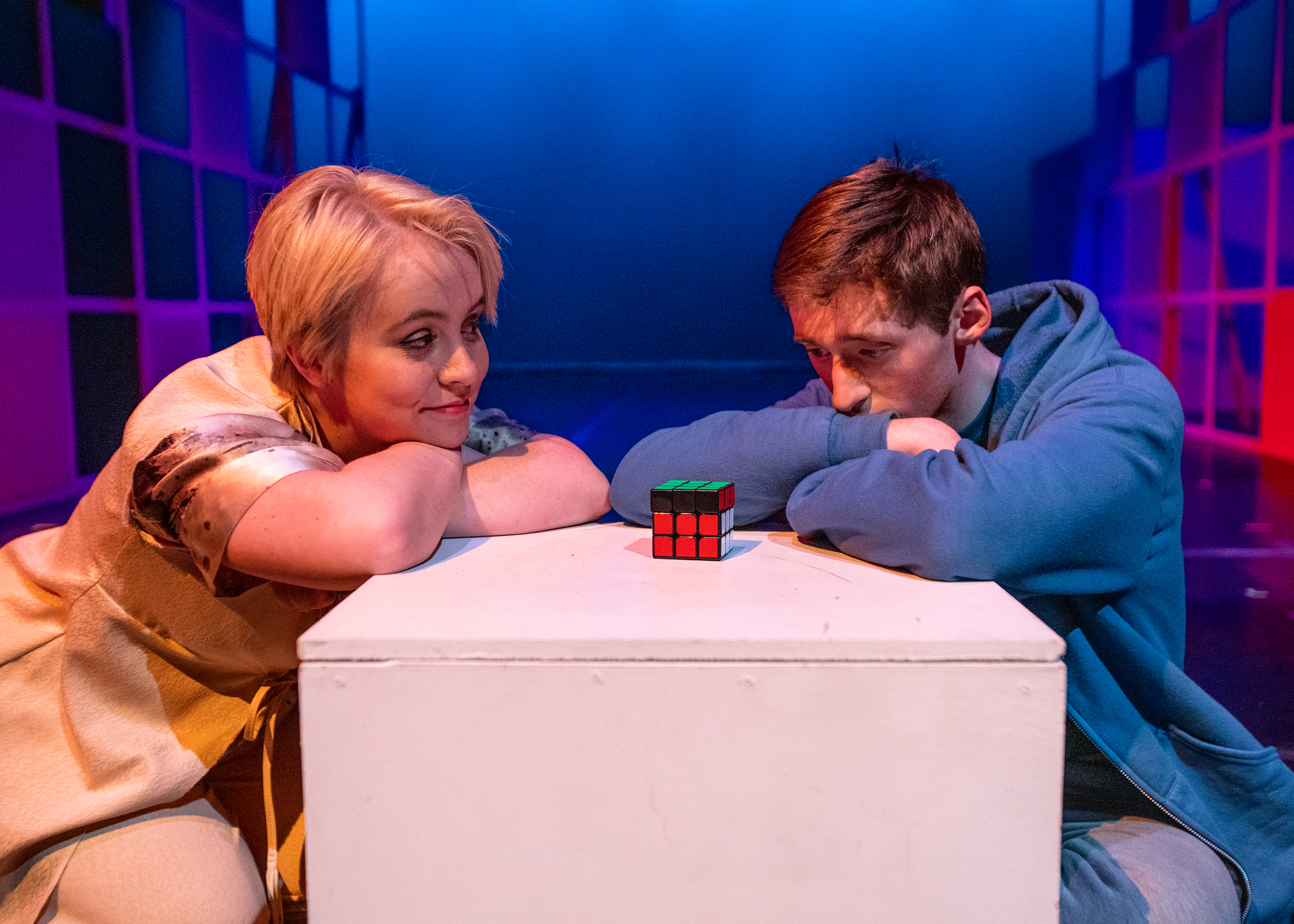
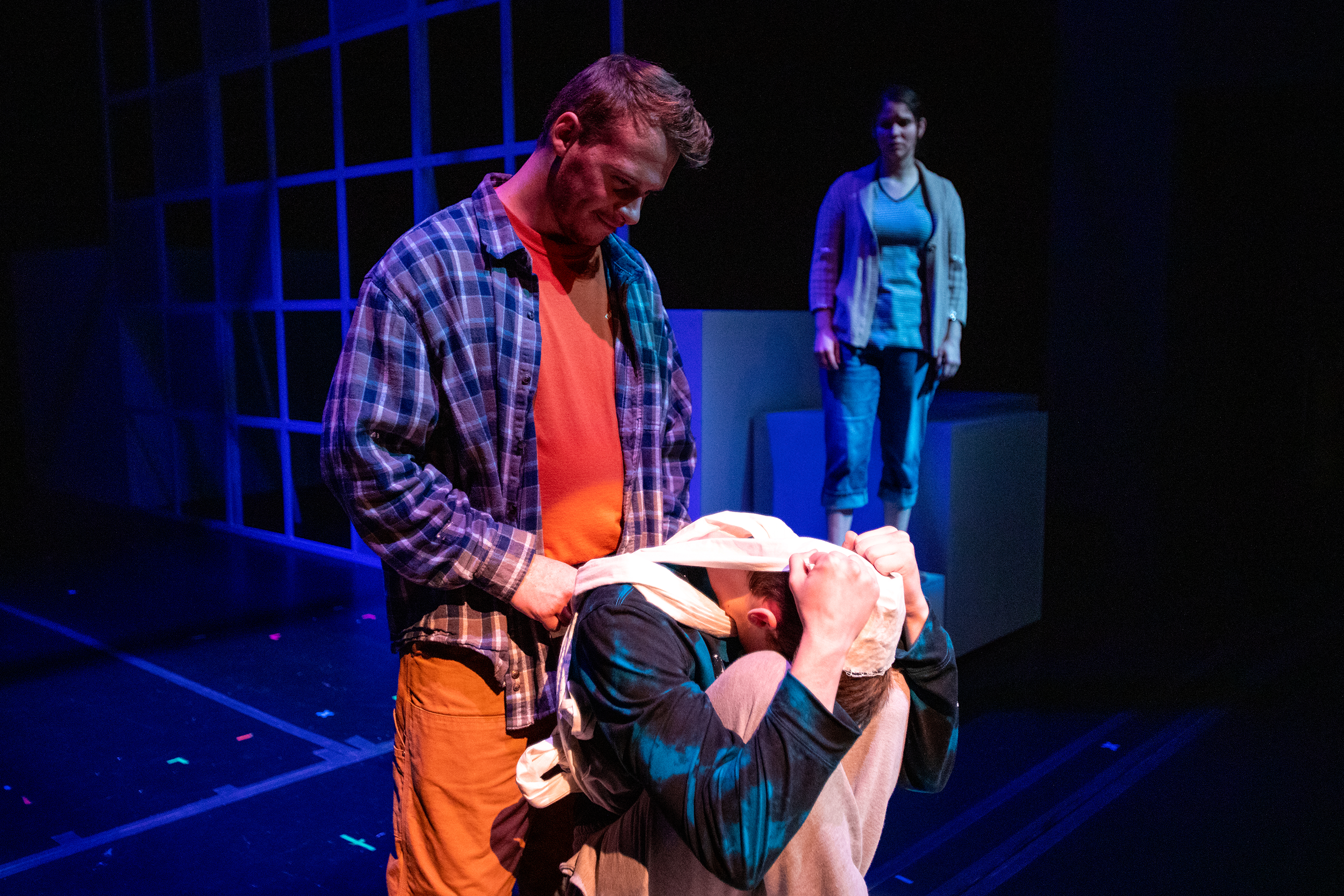
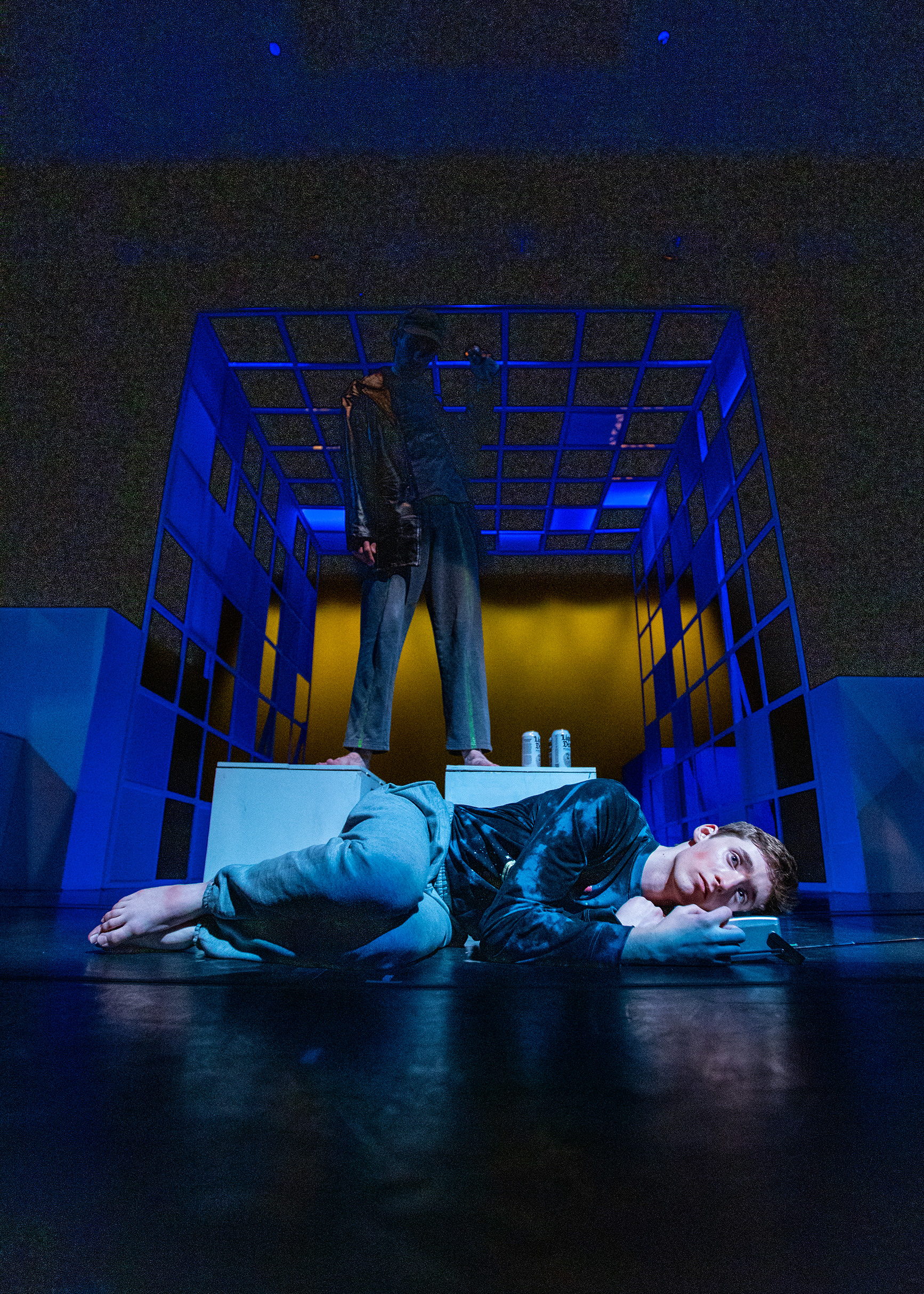
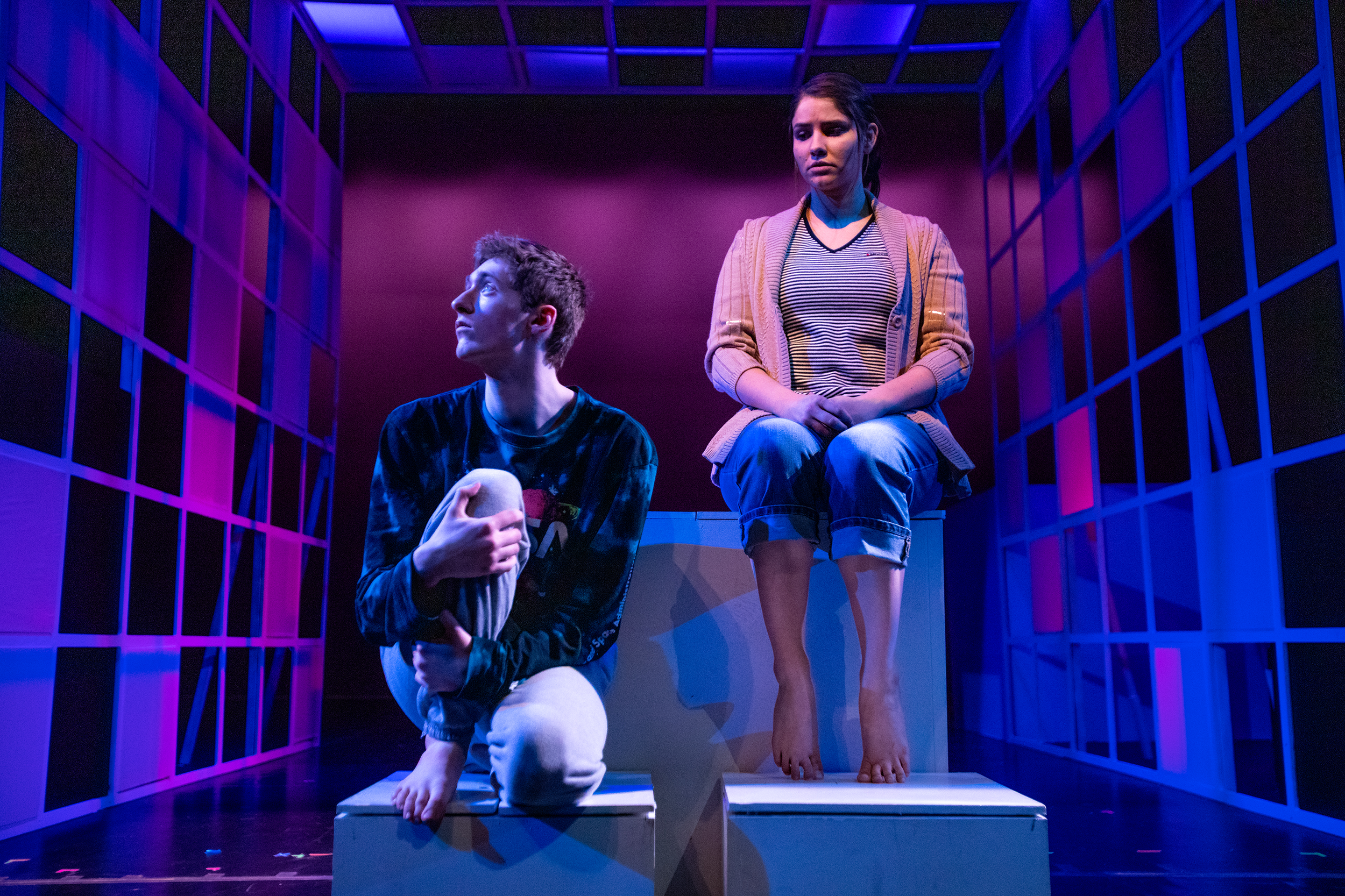
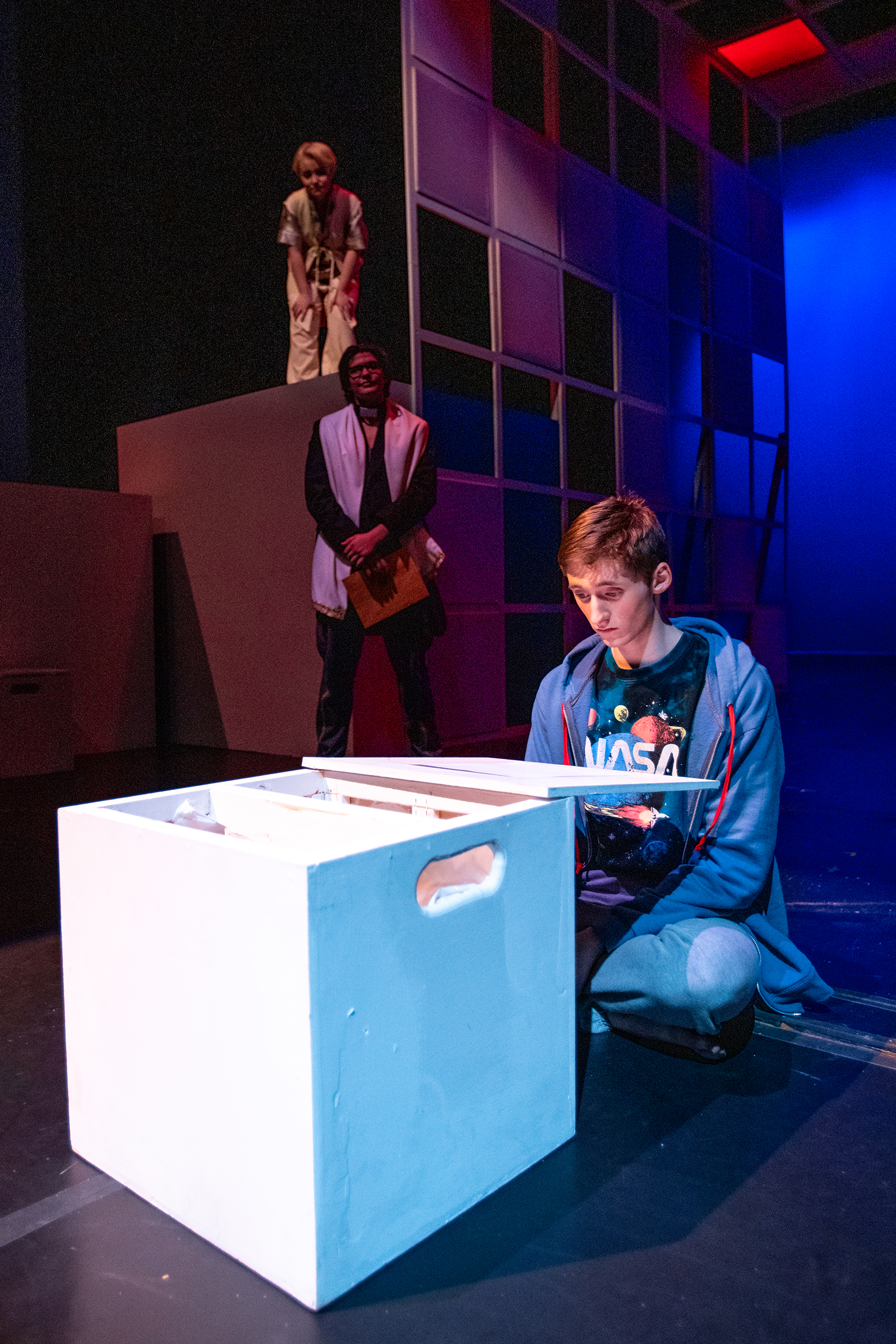
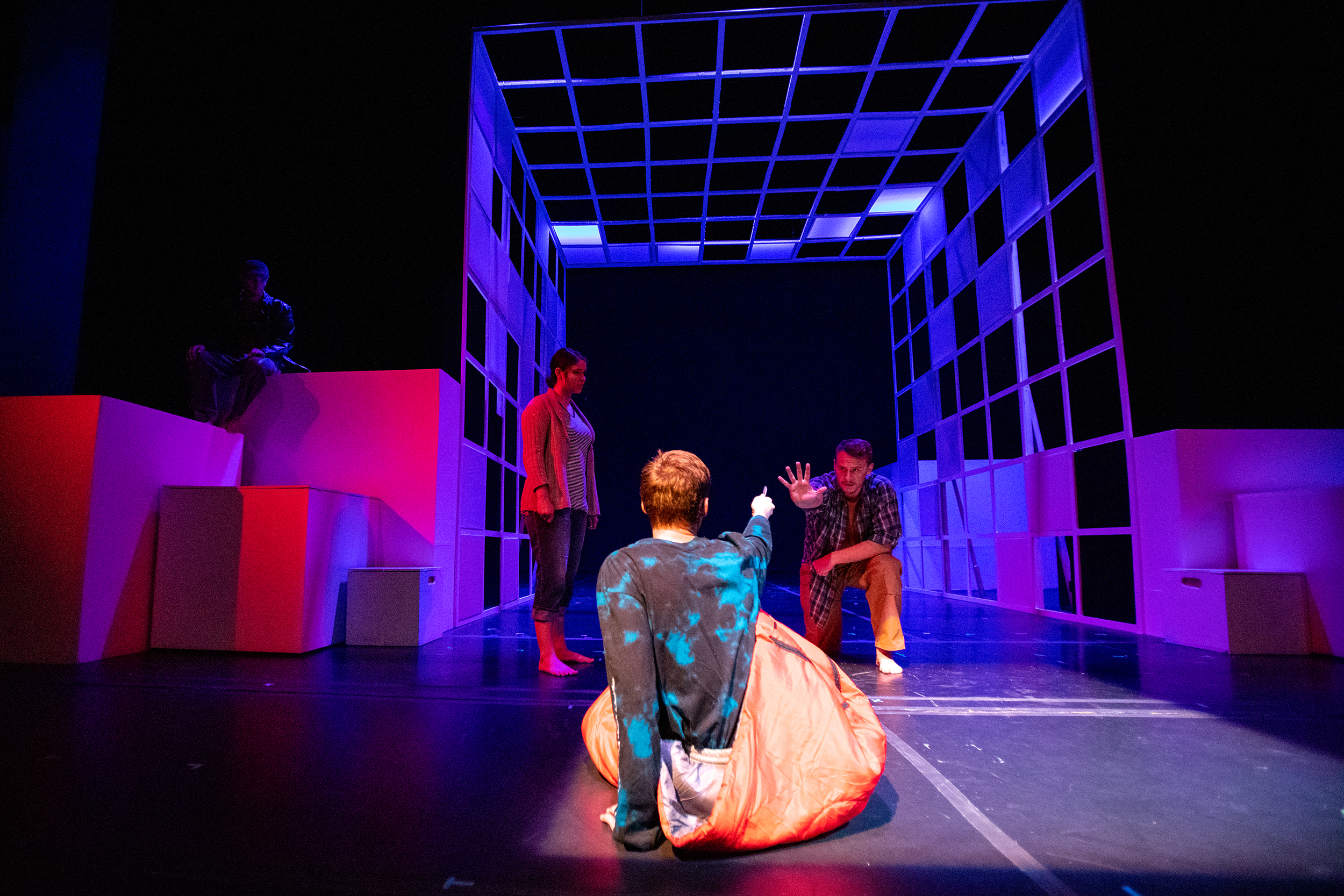
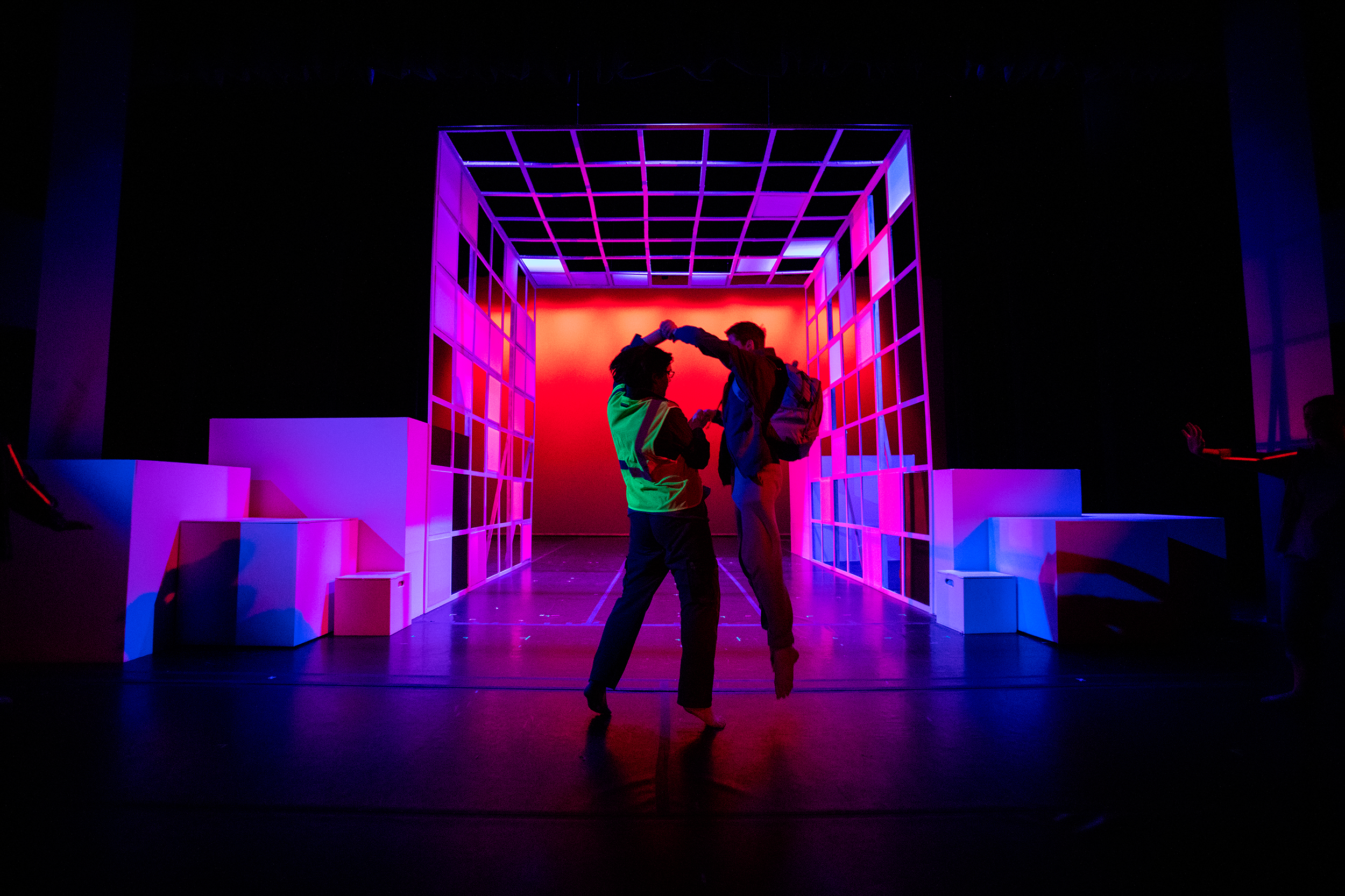
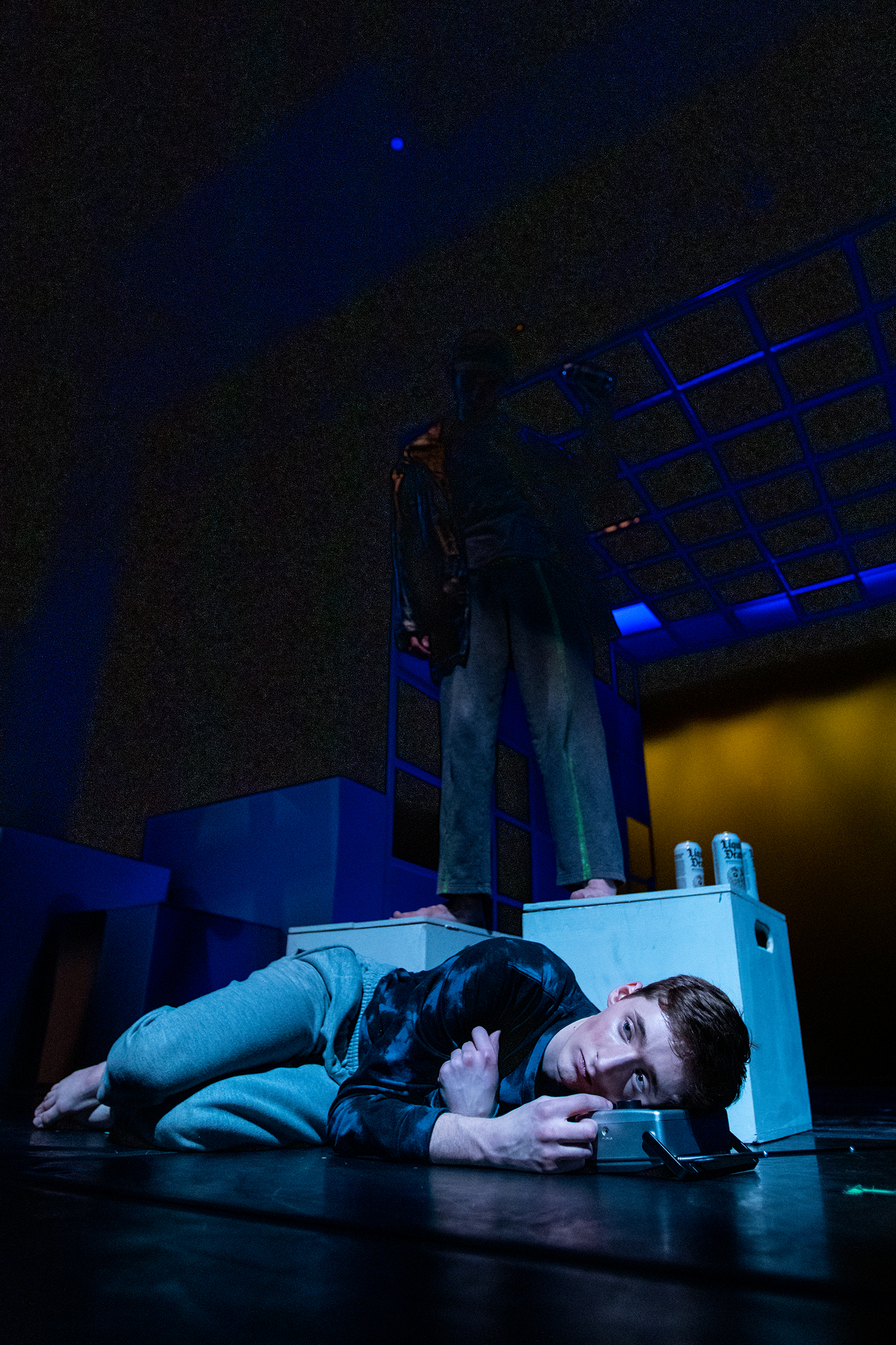
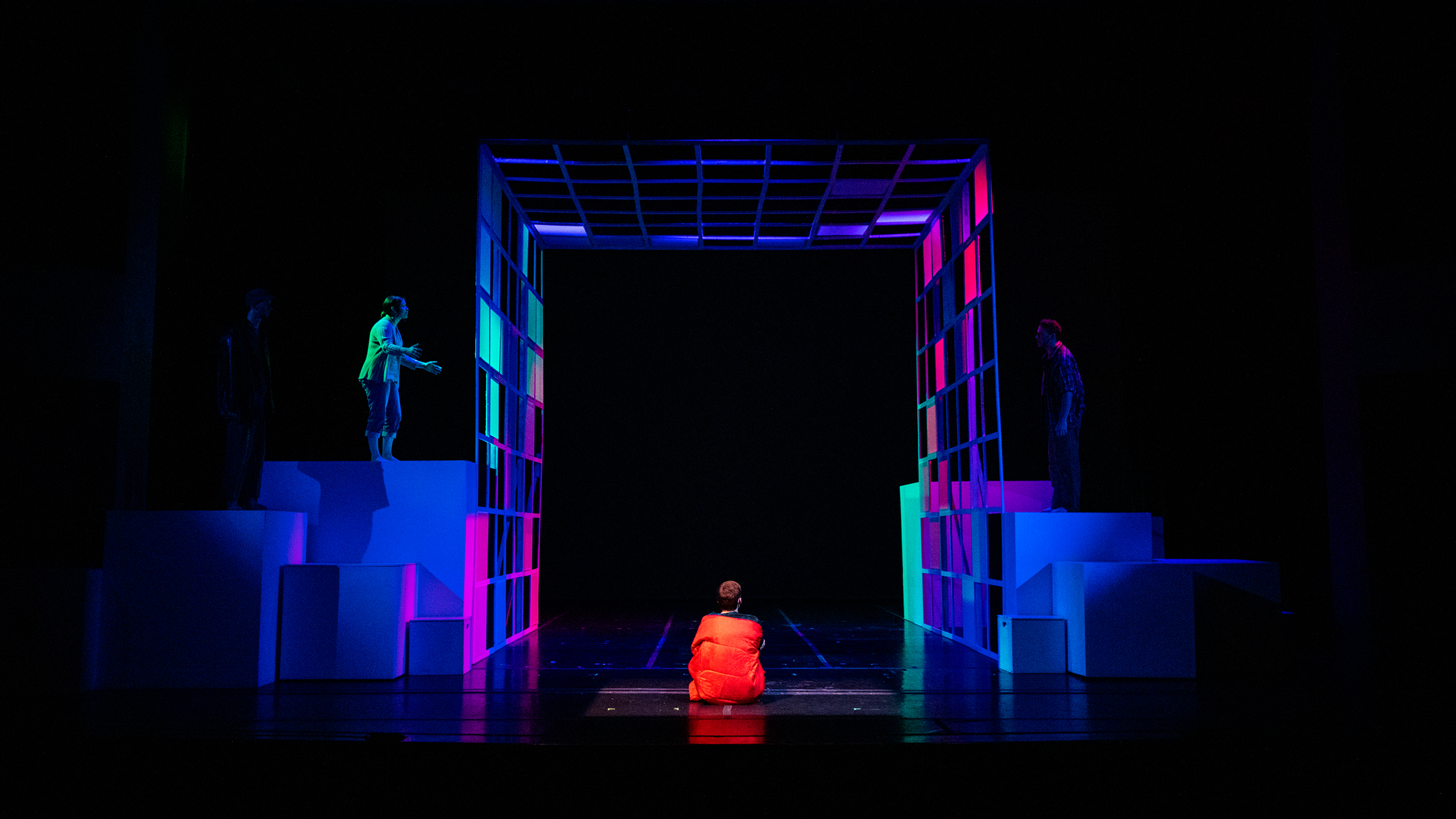
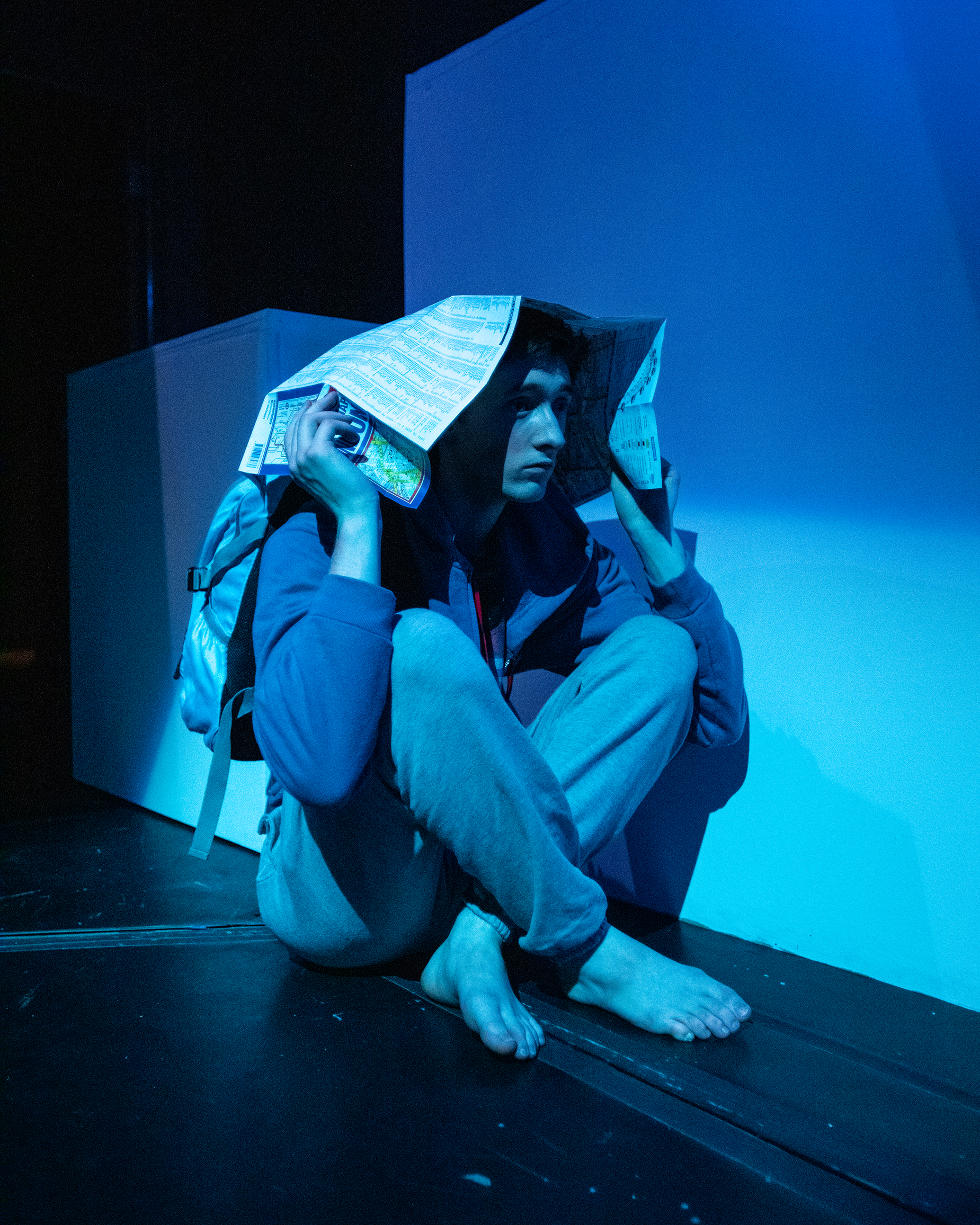
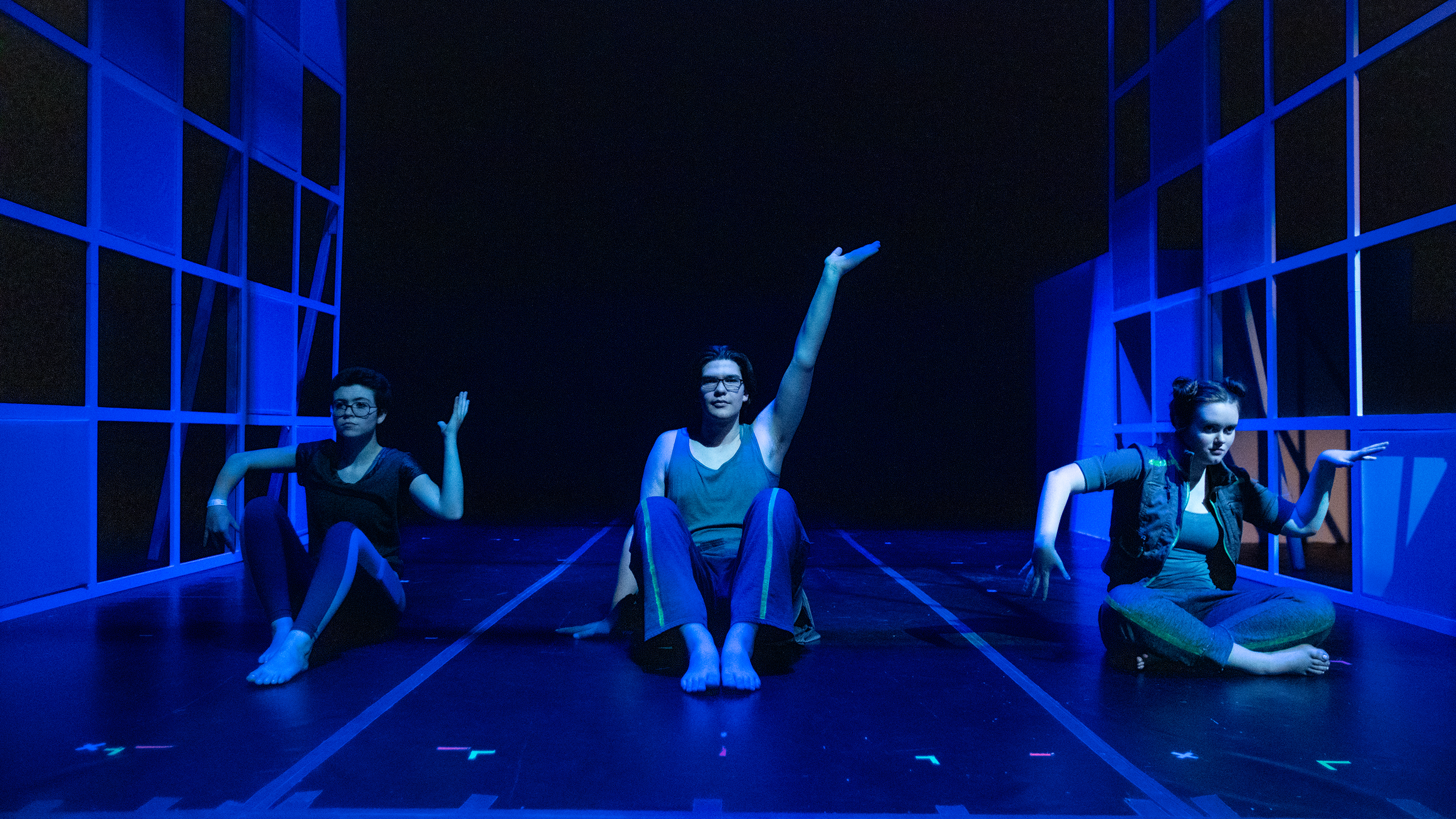
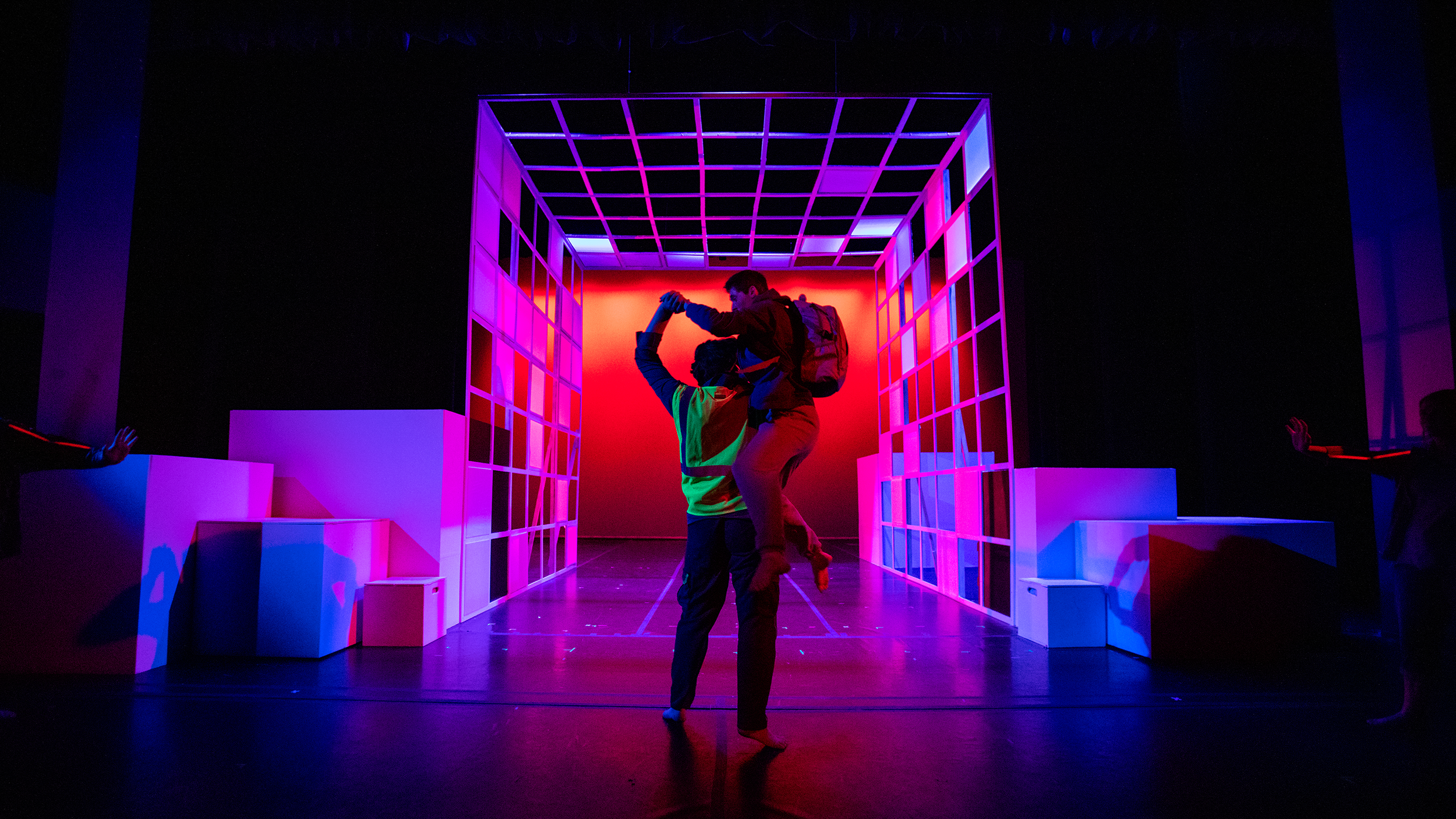
Nominated Show, KCACTF Region 8 Festival, Spring 2020
director’s note
Order. We all crave it to some degree, and as a director, my job is always to create it. The Curious Incident presents us with Christopher, a boy with strict boundaries, whose story was first imagined in an novel so interested in order that the chapters are numbered by primes. Add that to our concern that we depict autism truthfully and without stereotypes, and an already demanding rehearsal process, and, well — I wouldn’t blame you if you thought this play demanded I run an unusually tight ship.
But despite its surface, this play is not really about maintaining order, but about trust. As we watch Christopher’s story unravel, we see trust broken, forged, blindly followed, discredited, subverted, found in others, and finally found from within. The play is both a detective story in which we must trust facts and a journey where we must trust the destination and let go to the possibilities of what might be.
The creation of this play required trust at every step. The script was written through an act of trust — Mark Haddon trusted Simon Stephens to adapt his novel. The rehearsal process required the cast to trust and form bonds with each other, as you’ll read below. Performing and bringing this story to life carriers with it the responsibility of honoring the story. And speaking you, the audience, are part of it, too — this play trusts you with the privilege of seeing the world through an exceptional young man’s eyes.
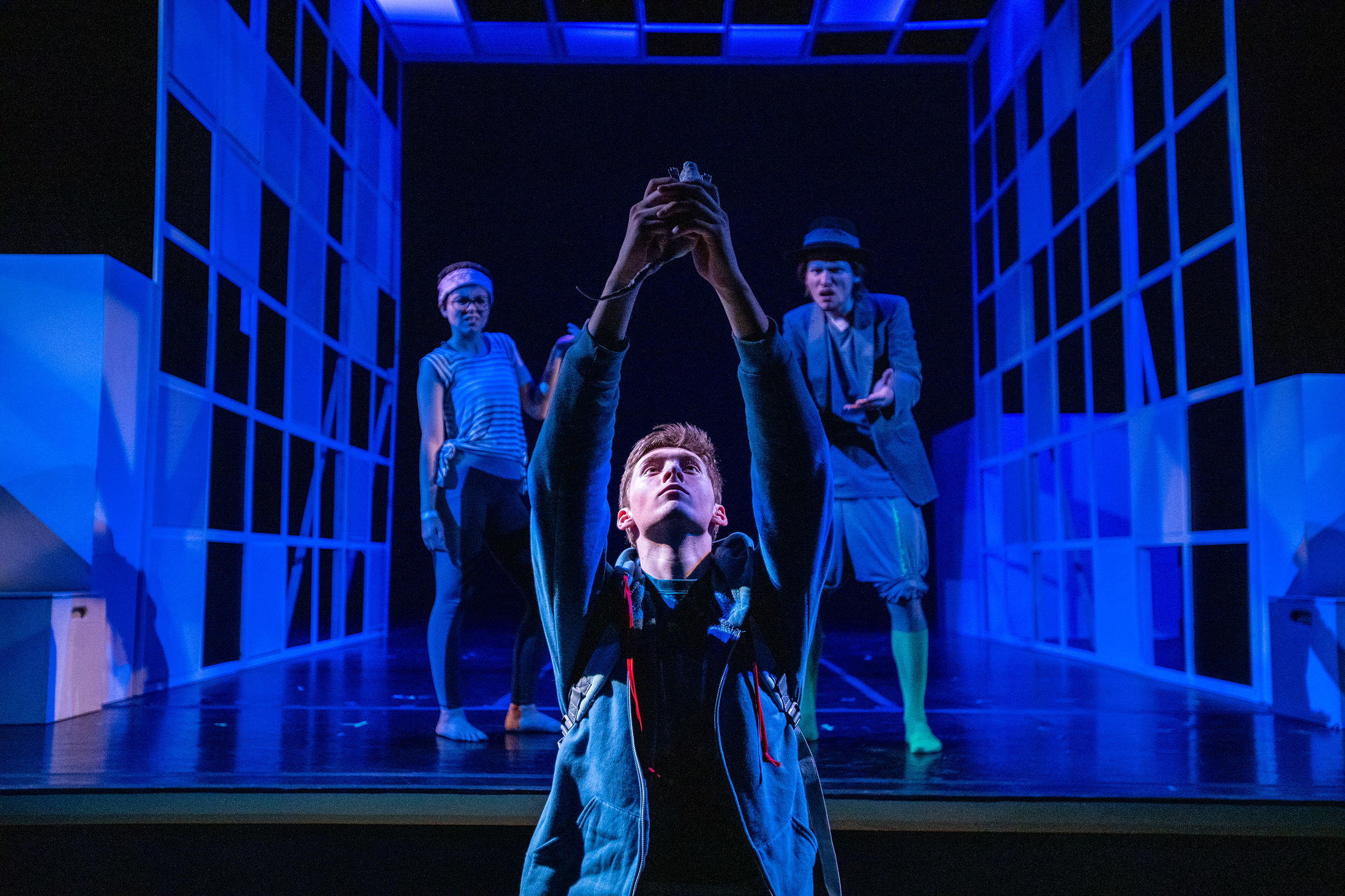
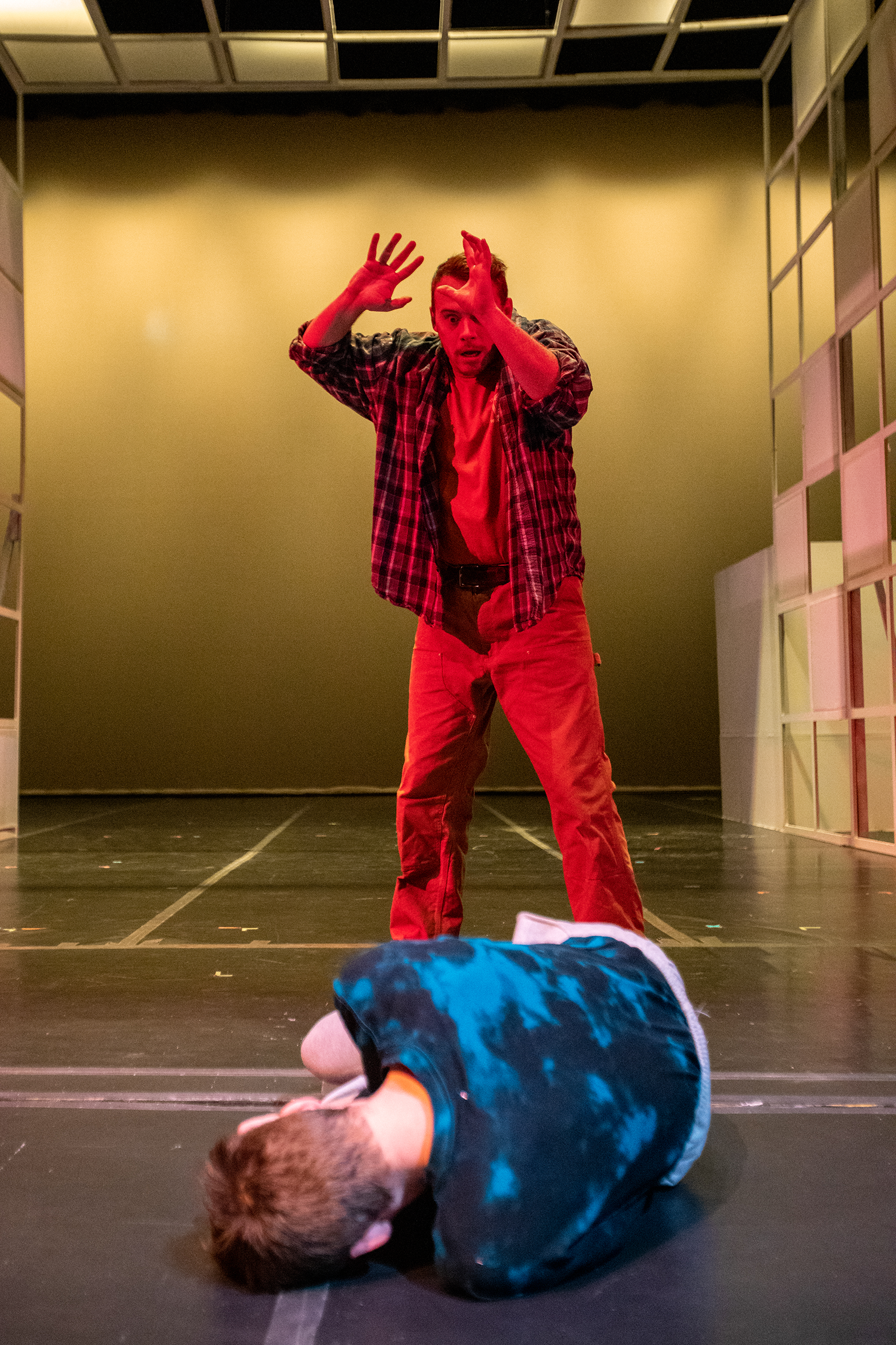
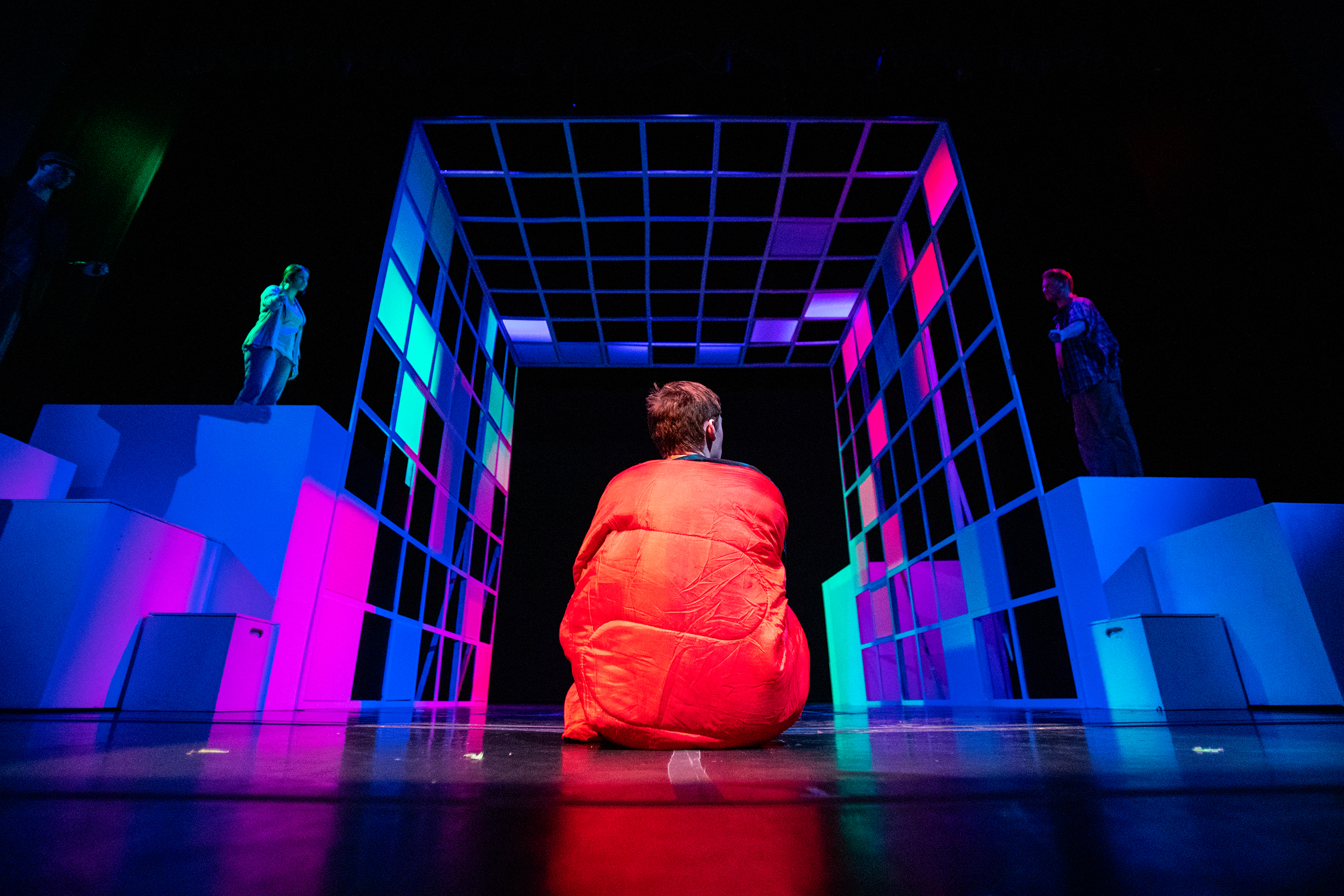
We endeavored to mirror that sentiment by leaving the traditional pre-production and rehearsal order by the wayside, instead favoring an open, creative space of collaboration. We obliged ourselves to be like Christopher, and tried to keep all ideas open to us. The result you’ll see is some Peter Brook, some punk, some expressionism, some realism, some Viewpoints, and all of that mixed with videogame-inspired music and mathematical rhythms. At times, many of us felt as if we were doing a brand-new thing entirely: devising a preexisting work. “I’ve never done something like this, or worked liked this before!” was a constant refrain. Each day, we walked into rehearsal and decided where the work would go without a constrained schedule. We marked out a light plot before blocking. Our rehearsal room door was unlocked to composers, designers, dancers, and other theatre students to share in the journey. We made early choices late, and late choices early. And in doing all of this, we believe we created a world to explore which paralleled Christopher’s own explorations — one which should never have been limited.
In creating what you’ll see tonight, we asked ourselves, “How would Christopher approach all of this?” A curious question. He’d like order, yes, but he’d know a play about being brave also had to be done so bravely. And we agree. We trust you will as well.
rehearsed and presented in consultation with the utah autism council
CREDITS
Written by Simon Stephens
Adapted from the novel by Mark Haddon
Director: Andrew Nogasky
Assistant Director: Sara E. McIver
Scenic Designer: Milinda Weeks
Costume Designer: Gina Love
Lighting Designer: Milinda Weeks
Assistant Lighting Designer: Nicholas Chevalier
Sound Designer: Tim Cheney
Technical Director: Trent Bean
Provided Music by: Amy Thomas, Annesha Gurney
Photos provided by: Milinda Weeks, Natalie Scarlet